Benchmark to Bedside

Building Modular Multimodal Machine Learning Infrastructure for Healthcare at Scale

People slide
Slides Slides QR Dissertation Dissertation QR

Counting Exercise

People slide

Eighty-four (84) lives were saved by one AI-enabled warning system in one trial.1

ML/AI for Health in a Nutshell

The Promise and Reality of AI in Healthcare

ArXiv papers with AI and health keywords in title/abstract and FDA-approved AI medical devices 1:

ML_PATTERN = r"(?ix)\b(machine[ _]?learning|deep[ _]?learning|neural[ _]?networks?|artificial[ _]?intelligence|\bAI\b|random[ _]?forest|support[ _]?vector[ _]?(machine|regression|classif\w+)?|\bSVM\b|gradient[ _]?boost\w*|\bXGBoost\b|\bLightGBM\b|\bCatBoost\b|\btransformer\b|\bBERT\b|\bGPT\b|\bLLM\b|\bVLM\b|large[ _]?language[ _]?models?|foundation[ _]?models?|(convolutional|recurrent|graph)[ _]?neural|\bLSTM\b|\bGRU\b|generative[ _]?adversarial|\bGAN\b|reinforcement[ _]?learning|(semi|self|un)[ _-]?supervised[ _]?learning|transfer[ _]?learning|federated[ _]?learning|natural[ _]?language[ _]?processing|\bNLP\b|computer[ _]?vision|(image|object|text)[ _]?(classification|detection|segmentation)|\bautoencoder\b|\bdiffusion[ _]?model\b)\b"
HEALTH_PATTERN = r"(?ix)\b(health(care)?|medical|clinical|patients?|hospital|diseases?|disorders?|syndrome|diagnosis|diagnostics?|prognosis|prognostic|treatments?|therapy|therapeutic|\bEHR\b|\bEMR\b|epidemiol\w*|radiol\w*|pathol\w*|genomics?|proteomics?|transcriptomics?|biomarkers?|\bdrug\b|pharmaceutical|pharmacolog\w*|cancer|tumor|tumour|oncol\w*|cardiac|cardiovascular|coronary|diabetes|diabetic|\bCOVID\b|\bSARS\b|pandemic|epidemic|biomedical|mortality|morbidity|\bICU\b|intensive[ _]?care|surgical|surgery|symptoms?|comorbid\w*|screening|triage|mental[ _]?health|psychiatr\w*|neurolog\w*|\bMRI\b|\bCT[ _]?scan\b)\b"

The Translation Gap in Healthcare

Few AI/ML models have been successfully deployed in clinical practice.1

Main barriers to translation:

\(P_1\): Incomplete patient state2

\(P_2\): Replication crisis3

\(P_3\): Lack of robust infrastructure4

Out of scope: ​⚡​ \(P_4\): Ethical and regulatory hurdles5 and ​⚡​\(P_5\) Financial incentives6

Research Contribution per Challenge

\(P_1\): Incomplete patient state \(C_1\): Multi-ward Multi-modal Warning Systems 🛏️

\(P_2\): Replication crisis \(C_2\): Enabling Reproducible Prediction Experiments 🧪

\(P_3\): Lack of robust infrastructure \(C_3\): Framework for Foundational AI Research 🏗️

Thesis Statement: Efficient clinical translation of ML requires prospectively collected multimodal data, reproducibility, and an ecosystem for foundational research.

UN WHO Global Strategy on Digital Health Objectives (1/4):

“To promote digital health collaborations and partnership models within and across organizations on the use of software global goods, open-standards, and common digital health architecture.” 1

Research Contributions in Pillars

\(C_1\): Multi-ward Multi-modal Warning Systems 🛏️

Robin P. van de Water, Axel Winter, Daniela Zuluaga Lotero, Bjarne Pfitzner, Lara Faraj, Bert Arnrich, Patrick Rockenschaub, Wenzel Schoning, Thomas Malinka, Christian Denecke, Johann Pratschke, Igor M. Sauer, and Max M. Maurer. Continuous Multimodal AI with Wearable Vital Signs Predicts Postoperative Complications in the General Ward. Nov. 2025. doi: 10.1101/2025.11.25.25340950. [12], Van de Water et al., 2025, Continuous Multimodal AI with Wearable Vital Signs Predicts Postoperative Complications in the General Ward,” Medrxiv preprint; Submitted to Lancet Digital Health (Submitted to Lancet Digital Health)

Christoph Riepe, Robin van de Water, Axel Winter, Bjarne Pfitzner, Lara Faraj, Robert Ahlborn, Maximilian Schulze, Daniela Zuluaga, Christian Schineis, Katharina Beyer, Johann Pratschke, Bert Arnrich, Igor M. Sauer, and Max M. Maurer. [13], Riepe et al., 2025, 90-day mortality prediction in elective visceral surgery using machine learning: A retrospective multicenter development, validation, and comparison study,” International Journal of Surgery

Robin van de Water, Axel Winter, Max M. Maurer, Felix August Treykorn, Daniela Zuluaga, Bjarne Pfitzner, Igor M. Sauer, and Bert Arnrich. “Combining Hospital-grade Clinical Data and Wearable Vital Sign Monitoring to Predict Surgical Complications”. Mar. 2024. [14], Van de Water et al., 2024, Combining Hospital-grade Clinical Data and Wearable Vital Sign Monitoring to Predict Surgical Complications,” ICLR 2024 Workshop on Learning from Time Series For Health

Robin van de Water, Axel Winter, Max M. Maurer, Felix August Treykorn, Bjarne Pfitzner, Igor M. Sauer, and Bert Arnrich. “Combining Time Series Modalities to Create Endpoint-driven Patient Records”. [15], Van de Water et al., 2024, Combining Time Series Modalities to Create Endpoint-driven Patient Records,” ICLR 2024 Workshop on Data-centric Machine Learning Research (DMLR): Harnessing Momentum for Science

\(C_2\): Enabling Reproducible Prediction Experiments 🧪

Robin P. van de Water, Hendrik Schmidt, and Patrick Rockenschaub. “ReciPies: A Lightweight Data Transformation Pipeline for Reproducible ML”., p. 9261. doi: 10.21105/joss.09261 [16], Van de Water et al., 2026, ReciPies: A lightweight data transformation pipeline for reproducible ML,” Journal of Open Source Software

Robin van de Water, Hendrik Nils Aurel Schmidt, Paul Elbers, Patrick Thoral, Bert Arnrich, and Patrick Rockenschaub. “Yet Another ICU Benchmark: A Flexible Multi-Center Framework for Clinical ML”. doi: 10.48550/arXiv.2306.05109. [17], Van de Water et al., 2024, Yet Another ICU Benchmark: A Flexible Multi-Center Framework for Clinical ML,” The Twelfth International Conference on Learning Representations

\(C_3\): Framework for Foundational AI Research 🏗️

Matthew McDermott, Ethan Steinberg, Jason Fries, Robin P. van de Water, Chao Pang, Patrick Rockenschaub, Pawel Renc, Jungwoo Oh, Kamilė Stankevičiūtė, Justin Xu, Tom Joseph Pollard, Nassim Oufattole, Michael Wornow, Teya Bergamaschi, Hyewon Jeong, Simon Lee, Vincent Jeanselme, Kiril Klein, Mikkel Odgaard, Maria Elkjær Montgomery, Arkadiusz Sitek, Mads Nielsen, Jeffrey Chiang, Noa Dagan, Isaac Kohane, Shalmali Joshi, Edward Choi, and Nigam Shah. [18], McDermott et al., 2025, MEDS: An Emerging Data Standard and Ecosystem for Health AI Research,” Accepted to New England Journal Of Medicine (NEJM) AI (2026) vol: 3, issue 6

MEDS Working Group: (alphabetized) Bert Arnrich, Edward Choi, Jason A. Fries, Matthew B. A. McDermott, Jungwoo Oh, Tom J. Pollard, Nigam Shah, Ethan Steinberg, Michael Wornow, Robin van de Water. [19], van de Water et al., 2024, Medical Event Data Standard (MEDS): Facilitating Machine Learning for Health,” ICLR 2024 workshop on learning from time series for health

Matthew B. A. McDermott, Aleksia Kolo, Chao Pang, Edward Choi, Ethan Steinberg, Hyewon Jeong, Jack Gallifant, Jason Alan Fries, Jeffrey N. Chiang, Jungwoo Oh, Justin Xu, Kamilė Stankevičiūtė, Kiril Vadimovic Klein, Mikkel Fruelund Odgaard, Nassim Oufattole, Patrick Rockenschaub, Pawel Renc, Robin van de Water, Shalmali Joshi, Simon Austin Lee, Teya Bergamaschi, Tom Pollard, Vincent Jeanselme, Nigam Shah, Michael Wornow, Aparajita Kashyap, Xinzhou Jiang, Yanwei Li, Young Sang Choi, Yuta Kobayashi, and Ryan King. [20], McDermott et al., 2024, MEDS Decentralized, Extensible Validation (MEDS-DEV) Benchmark: Establishing Reproducibility and Comparability in ML for Health,” Machine Learning for Health (ML4H), 15-16 December 2024, Vancouver, Canada

Matthew B. A. McDermott, Justin Xu, Teya S. Bergamaschi, Hyewon Jeong, Simon A. Lee, Nassim Oufattole, Patrick Rockenschaub, Kamilė Stankevičiūtė, Ethan Steinberg, Jimeng Sun, Robin P. Van De Water, Michael Wornow, John Wu, and Zhenbang Wu. “MEDS: Building Models and Tools in a Reproducible Health AI Ecosystem”. SIGKDD Tutorial [21], McDermott et al., 2025, MEDS: Building Models and Tools in a Reproducible Health AI Ecosystem,” ACM

Robin P. Van de Water. “Scaling Up Clinical ML from Datasets to Entire Health Systems through the MEDS Ecosystem”. In: Berlin, June 2025 [22], Van de Water, 2025, Scaling Up Clinical ML from Datasets to Entire Health Systems through the MEDS Ecosystem,” SBHD 2025 International Conference on Systems Biology of Human Diseases

All Publications Chronologically

Matthew McDermott, Ethan Steinberg, Jason Fries, Robin P. van de Water, Chao Pang, Patrick Rockenschaub, Pawel Renc, Jungwoo Oh, Kamilė Stankevičiūtė, Justin Xu, Tom Joseph Pollard, Nassim Oufattole, Michael Wornow, Teya Bergamaschi, Hyewon Jeong, Simon Lee, Vincent Jeanselme, Kiril Klein, Mikkel Odgaard, Maria Elkjær Montgomery, Arkadiusz Sitek, Mads Nielsen, Jeffrey Chiang, Noa Dagan, Isaac Kohane, Shalmali Joshi, Edward Choi, and Nigam Shah. [18], McDermott et al., 2025, MEDS: An Emerging Data Standard and Ecosystem for Health AI Research,” Accepted to New England Journal Of Medicine (NEJM) AI (2026) vol: 3, issue 6

Robin P. van de Water, Hendrik Schmidt, and Patrick Rockenschaub. “ReciPies: A Lightweight Data Transformation Pipeline for Reproducible ML”., p. 9261. doi: 10.21105/joss.09261 [16], Van de Water et al., 2026, ReciPies: A lightweight data transformation pipeline for reproducible ML,” Journal of Open Source Software

Katharina Alefs, Susanne Ibing, Pia Francesca Rissom, Jan Carlo Schmid, Arkadiusz Kwasigroch, Robin van de Water, Bernhard Y. Renard, and Eugenia Alleva. [24], Alefs et al., 2025, Towards Foundation Model-Based Propensity Score Matching from Electronic Health Records,” Machine Learning for Health Symposium 2025

Christoph Riepe, Robin van de Water, Axel Winter, Bjarne Pfitzner, Lara Faraj, Robert Ahlborn, Maximilian Schulze, Daniela Zuluaga, Christian Schineis, Katharina Beyer, Johann Pratschke, Bert Arnrich, Igor M. Sauer, and Max M. Maurer. [13], Riepe et al., 2025, 90-day mortality prediction in elective visceral surgery using machine learning: A retrospective multicenter development, validation, and comparison study,” International Journal of Surgery

Bjarne Pfitzner, Max M. Maurer, Axel Winter, Christoph Riepe, Igor M. Sauer, Robin van de Water, Christian Denecke, Johann Pratschke, and Bert Arnrich. [25], Pfitzner et al., 2025, Differentially-Private Federated Learning with Non-IID Data For Surgical Risk Prediction. International Journal of Semantic Computing

Axel Winter, Bjarne Pfitzner, Robin P. van de Water, Lara Faraj, Christoph Riepe, Wolf-Heinrich Hahn, Felix Krenzien, Christian Schineis, Thomas Malinka, and Wenzel Schöning. [26], Winter et al., 2025, Overcoming the data barrier: Transfer learning for 90-day mortality prediction in general surgery–a retrospective multicenter development and comparison study,” International Journal of Surgery

Robin Philippus van de Water, Ethan Steinberg, Michael Wornow, Patrick Rockenschaub, and Matthew McDermott. MIMIC-IV Demo Data in the Medical Event Data Standard (MEDS). 2025. doi: 10.13026/T2Y8-EA41. [27], Van de Water et al., 2025, MIMIC-IV demo data in the Medical Event Data Standard (MEDS),” PhysioNet

Robin P. Van de Water. “Scaling Up Clinical ML from Datasets to Entire Health Systems through the MEDS Ecosystem”. In: SBHD 2025 International Conference on Systems Biology of Human Diseases. Berlin, June 2025 [22], Van de Water, 2025, Scaling Up Clinical ML from Datasets to Entire Health Systems through the MEDS Ecosystem,” SBHD 2025 International Conference on Systems Biology of Human Diseases

Robin van de Water, Hendrik Nils Aurel Schmidt, Paul Elbers, Patrick Thoral, Bert Arnrich, and Patrick Rockenschaub. “Yet Another ICU Benchmark: A Flexible Multi-Center Framework for Clinical ML”. doi: 10.48550/arXiv.2306.05109. [17], Van de Water et al., 2024, Yet Another ICU Benchmark: A Flexible Multi-Center Framework for Clinical ML,” The Twelfth International Conference on Learning Representations

MEDS Working Group: (alphabetized) Bert Arnrich, Edward Choi, Jason A. Fries, Matthew B. A. McDermott, Jungwoo Oh, Tom J. Pollard, Nigam Shah, Ethan Steinberg, Michael Wornow, Robin van de Water. “Medical Event Data Standard (MEDS): Facilitating Machine Learning for Health”. 2024. [19], van de Water et al., 2024, Medical Event Data Standard (MEDS): Facilitating Machine Learning for Health,” ICLR 2024 workshop on learning from time series for health

Matthew B. A. McDermott, Aleksia Kolo, Chao Pang, Edward Choi, Ethan Steinberg, Hyewon Jeong, Jack Gallifant, Jason Alan Fries, Jeffrey N. Chiang, Jungwoo Oh, Justin Xu, Kamilė Stankevičiūtė, Kiril Vadimovic Klein, Mikkel Fruelund Odgaard, Nassim Oufattole, Patrick Rockenschaub, Pawel Renc, Robin van de Water, Shalmali Joshi, Simon Austin Lee, Teya Bergamaschi, Tom Pollard, Vincent Jeanselme, Nigam Shah, Michael Wornow, Aparajita Kashyap, Xinzhou Jiang, Yanwei Li, Young Sang Choi, Yuta Kobayashi, and Ryan King. [20], McDermott et al., 2024, MEDS Decentralized, Extensible Validation (MEDS-DEV) Benchmark: Establishing Reproducibility and Comparability in ML for Health,” Machine Learning for Health (ML4H), 15-16 December 2024, Vancouver, Canada

Matthew B. A. McDermott, Justin Xu, Teya S. Bergamaschi, Hyewon Jeong, Simon A. Lee, Nassim Oufattole, Patrick Rockenschaub, Kamilė Stankevičiūtė, Ethan Steinberg, Jimeng Sun, Robin P. Van De Water, Michael Wornow, John Wu, and Zhenbang Wu. “MEDS: Building Models and Tools in a Reproducible Health AI Ecosystem”. In: Proceedings of the 31st ACM SIGKDD Conference on Knowledge Discovery and Data Mining V.2. Toronto ON Canada: ACM, Aug. 2025, pp. 6243-6244. isbn: 979-8-4007-1454-2. doi: 10.1145/3711896.3737608. [21], McDermott et al., 2025, MEDS: Building Models and Tools in a Reproducible Health AI Ecosystem,” ACM

Max M. Maurer, Bjarne Pfitzner, Robin P. van de Water, Lara Faraj, Christoph Riepe, Daniela Zuluaga, Felix Krenzien, Nathanael Raschzok, Robert Siegel, Christian Schineis, Bert Arnrich, Katharina Beyer, Johann Pratschke, Igor M. Sauer, and Axel Winter. [28], Maurer et al., 2025, Privacy preserving federated learning for 90-day mortality prediction in colorectal surgery: A multicenter retrospective development and comparison study,” International Journal of Surgery (London, England)

Robin van de Water, Axel Winter, Max M. Maurer, Felix August Treykorn, Daniela Zuluaga, Bjarne Pfitzner, Igor M. Sauer, and Bert Arnrich. [14], Van de Water et al., 2024, Combining Hospital-grade Clinical Data and Wearable Vital Sign Monitoring to Predict Surgical Complications,” ICLR 2024 Workshop on Learning from Time Series For Health

Bjarne Pfitzner, Max M. Maurer, Axel Winter, Christoph Riepe, Igor M. Sauer, Robin van de Water, and Bert Arnrich. [30], Pfitzner et al., 2024, Differentially-Private Federated Learning with Non-IID Data for Surgical Risk Prediction,” IEEE

Orhan Konak, Robin van de Water, Valentin Doring, Tobias Fiedler, Lucas Liebe, Leander Masopust, Kirill Postnov, Franz Sauerwald, Felix Treykorn, and Alexander Wischmann. [31], Konak et al., 2023, HARE: Unifying the Human Activity Recognition Engineering Workflow,” Sensors

Robin van de Water, Francesco Ventura, Zoi Kaoudi, Jorge-Arnulfo Quiane-Ruiz, and Volker Markl. [33], Van de Water et al., 2022, Farming Your ML-based Query Optimizer’s Food,” IEEE [Best demonstration paper award]

Robin van de Water, Francesco Ventura, Z Kaoudi, J Quiane-Ruiz, and Volker Markl. “Farm Your ML-based Query Optimizer’s Food!-Human-Guided Training Data Generation-”. In: Conference on Innovative Data Systems Research (CIDR). 2022 [34], Van de Water et al., 2022, Farm your ML-based query optimizer’s Food!–Human-Guided training data generation–,” Conference on Innovative Data Systems Research (CIDR)

Lientje Maas, Mathan Geurtsen, Florian Nouwt, Stefan F. Schouten, Robin van de Water, Sandra Van Dulmen, Fabiano Dalpiaz, Kees Van Deemter, and Sjaak Brinkkemper. [35], Maas et al., 2020, The Care2Report System: Automated Medical Reporting as an Integrated Solution to Reduce Administrative Burden in Healthcare. HICSS

Under submission:

Jan Carlo Schmid, Susanne Ibing, Stefan Kalabakov, Katharina Alefs, Robin P. van de Water, Arkadiusz Kwasigroch, Eugenia Alleva, Bert Arnrich, Bernhard Y. Renard, and Maia Kayal. [36], Schmid et al., 2025, Expert-defined, chart-reviewed features outperform EHR foundation models for predicting crohn’s-like disease of the pouch,” Under review at The American Journal of Gastroenterology

Preprints (preparing for submission):

Robin P. van de Water, Axel Winter, Daniela Zuluaga Lotero, Bjarne Pfitzner, Lara Faraj, Bert Arnrich, Patrick Rockenschaub, Wenzel Schoning, Thomas Malinka, Christian Denecke, Johann Pratschke, Igor M. Sauer, and Max M. Maurer. [12], Van de Water et al., 2025, Continuous Multimodal AI with Wearable Vital Signs Predicts Postoperative Complications in the General Ward,” Medrxiv preprint; Submitted to Lancet Digital Health (Submitted to Lancet Digital Health)

Alisher Turubayev, Anna Shopova, Fabian Lange, Mahmut Kamalak, Paul Mattes, Victoria Ayvasky, Bert Arnrich, Bjarne Pfitzner, and Robin P. van de Water. [37], Turubayev et al., 2025, Closing Gaps: An Imputation Analysis of ICU Vital Signs,” http://arxiv.org/abs/2510.24217

Manuscripts in preparation:

Robin P. van de Water, Katharina Marie Alefs, Susanne Ibing, Stefan Kalabakov, Aadil Rasheed, Pia Francesca Rissom, Jan Carlo Schmid, Arkadiusz Kwasigroch, Eugenia Alleva, and Christoph Lippert. “FLAMES: EHR Foundation Models as a Resource for Health Systems”. 2026

Robin P. van de Water, Christoph Riepe, Bjarne Pfitzner, Lara Faraj, Daniela Zuluaga, Christian Schineis, Katharina Beyer, Johann Pratschke, Igor Sauer, Axel Winter, and Max Maurer. “Machine Learning for 30-Day Mortality Prediction for High-Risk General Emergency Surgery”. In preparation (2025)

Wouter van Amsterdam, Michael Kamp, Rajesh Ranganath, Robin P. van de Water, Florian Markowetz, Evangelia Christodoulou, Yamuna Krishnamurthy, Christoph Lippert, Jeff Clark, Julia E. Vogt, Raul Santos-Rodriguez, Thomas Gartner, Gilbert Koch, and Brett Beaulieu-Jones. “Missing Incentives, Missing Oversight: The Challenges of AI Monitoring in Clinical Practice”. 2025

\(C_1\): Multi-ward Multi-modal Warning Systems 🛏️

\(C_2\): Enabling Reproducible Prediction Experiments 🧪

\(C_3\): Framework for Foundational AI Research 🏗️

\(P_1\): Incomplete patient state

Multi-ward Multi-modal Early Warning Systems 🛏️

​⚡​ \(P_1\): Incomplete patient state: Retrospective, observational, data does not accurately capture the state of the patient.

300M+ surgeries annually1.

~1/3 of hospital costs are surgery-related2.

Up to 25% experience life-threatening adverse events, often on the ward3.

Ward monitoring insufficient for subtle condition changes4.

A Prospective Cohort Study: “Hybrid Ward”

Can we leverage continuous data from wearable devices to improve warning systems for postoperative complications (surgical site infections) in the general ward? 1

1

Clinical ASsist Heuristic Early Warning System+

  • Use open-source framework for training and model selection.

  • Use optimal model outputs with alarm mechanics to reduce alarm burden (alarms/patient/day) while maintaining precision.1
  • Decision curve analysis: harm-to-benefit ratio drives alarm selection.

How well does it work?

→ CASHEWS(+) significantly improves discrimination performance.

Lead time performance has little drop-off.

💡 Monitoring at the right time extends AI-assisted surveillance to resource-constrained wards.

\(P_2\): Replication crisis

Enabling Reproducible Prediction Experiments 🧪

​⚡ \(P_2\): Replication crisis1:​ Comparing approaches across papers is difficult because of:

Data/Splits

Cohort

Preprocessing

Evaluation

Code/Models2

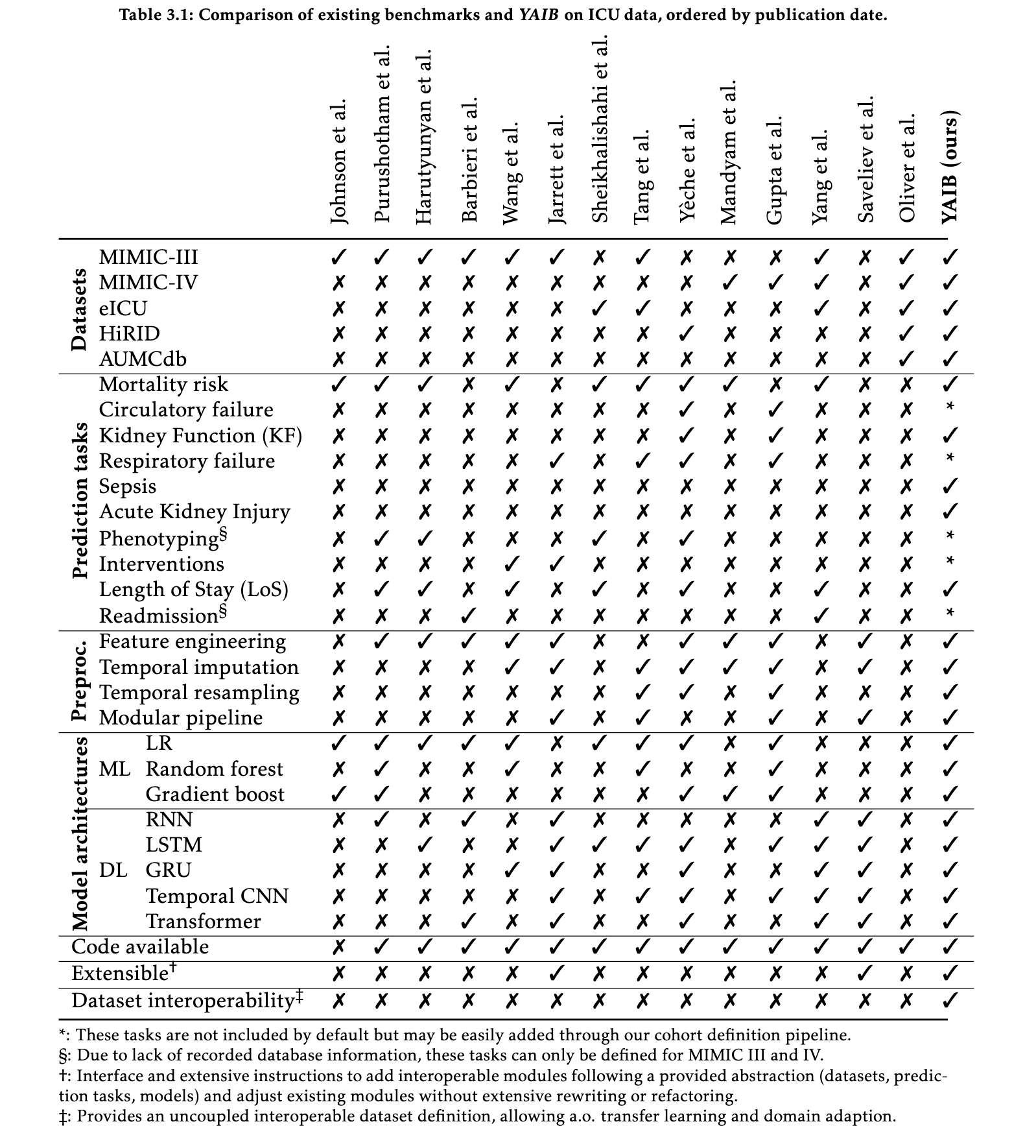
Can we create a framework for reliably reproducing scientific results of clinical prediction models across datasets and preprocessing choices?

Considerations for Reproducible Clinical ML Research

Problems:

  • Medical research is inherently complex.
  • One size fits-all always impossible.
  • Hardcoded ≠ reproducible.

Goals:

  • Modular setup maintaining reproducibility.
  • Extensibility across experiment lifecycle.
  • Out-of-the-box support: datasets, tasks, models.

Outcome:

  • ReciPies1: Declare, execute, and share ML preprocessing pipelines.
  • Yet Another ICU Benchmark (YAIB)2: Reproducible prediction experiments across (open-access) datasets.

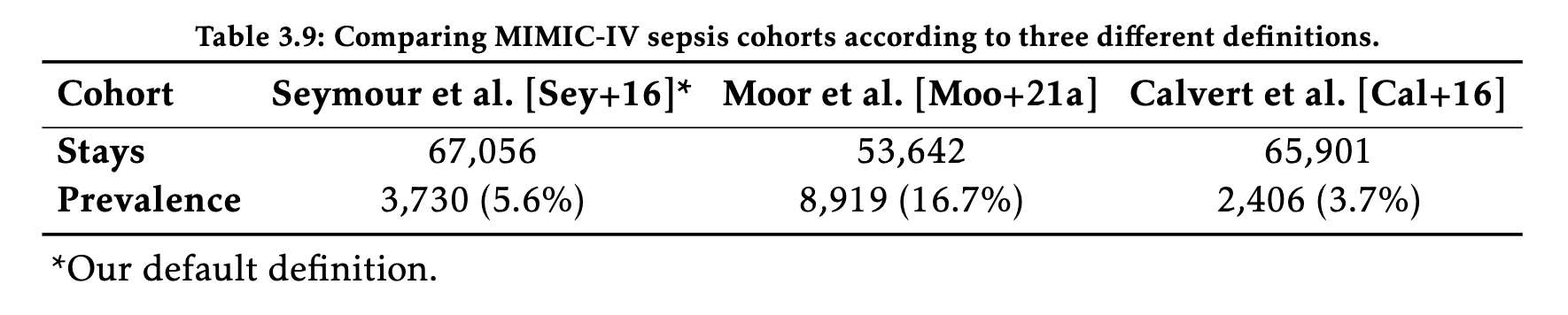
Different Definitions, Different Conclusions

Sepsis: Life-threatening response to infection that causes injury to its own tissues and organs.

→ ⚡ Problem: no single, universally accepted definition.

Prediction on MIMIC-IV1 using Gated Recurrent Unit (GRU) and Light Gradient Boosting Machine (LGBM) models with different cohort definitions from literature2:

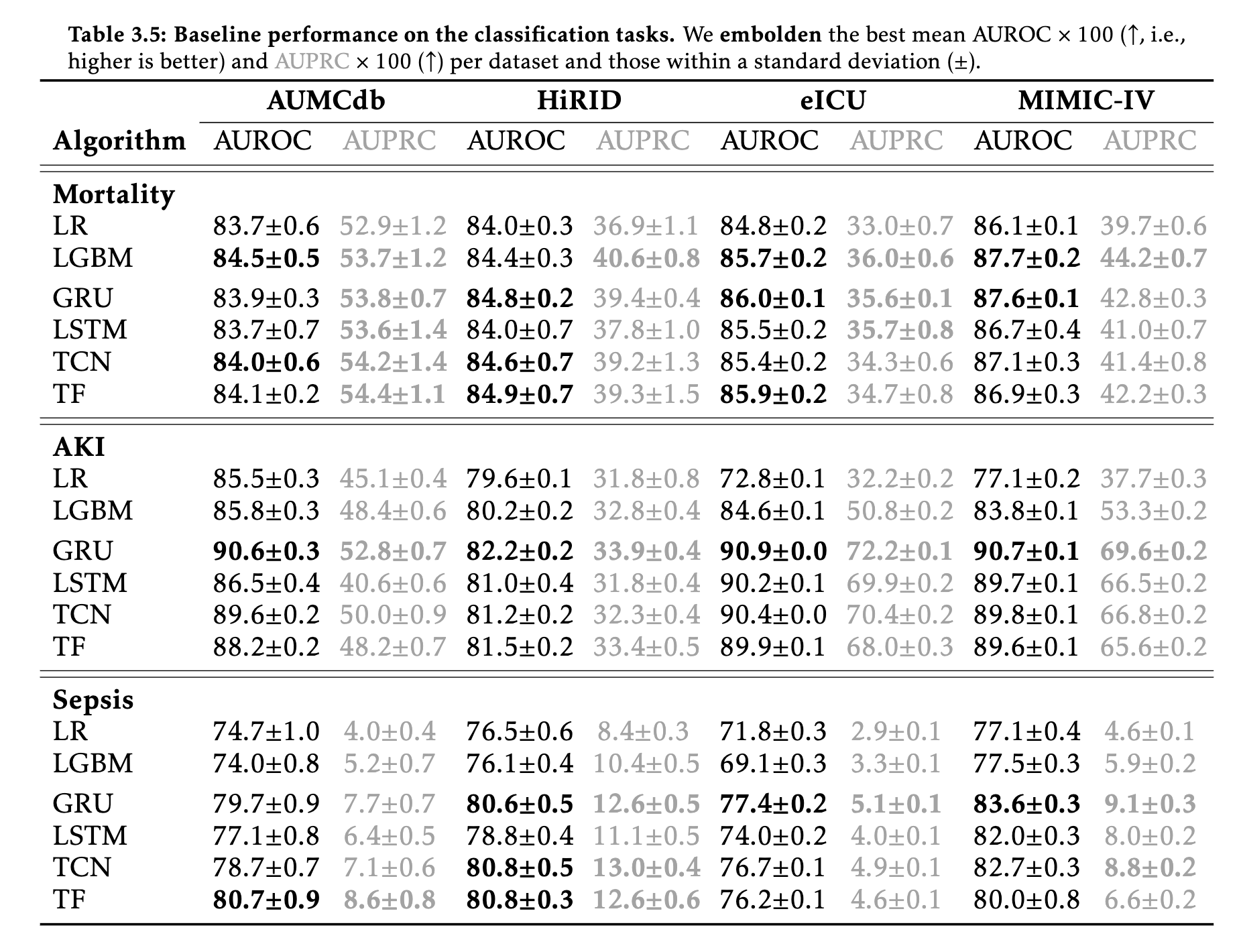
YAIB: Mortality Prediction Across Datasets

External validation: training on row dataset, evaluation on column dataset using GRU:

Transfer learning: Train a model on “generalizable” eICU and finetune on HiRID:

💡 Reproducible, harmonized benchmarking enables wide-ranging prediction experiments.

\(P_3\): Lack of robust infrastructure

Framework for Foundational Health AI 🏗️

​⚡ \(P_3\): Lack of robust infrastructure: Training high-parameter AI models for heterogeneous data is difficult.

Event-based Foundation Models (FMs) show promise in Health AI.1

Progress is hindered by lack of reusable, scalable tooling.2

How can we enable reproducible AI research across healthcare systems?

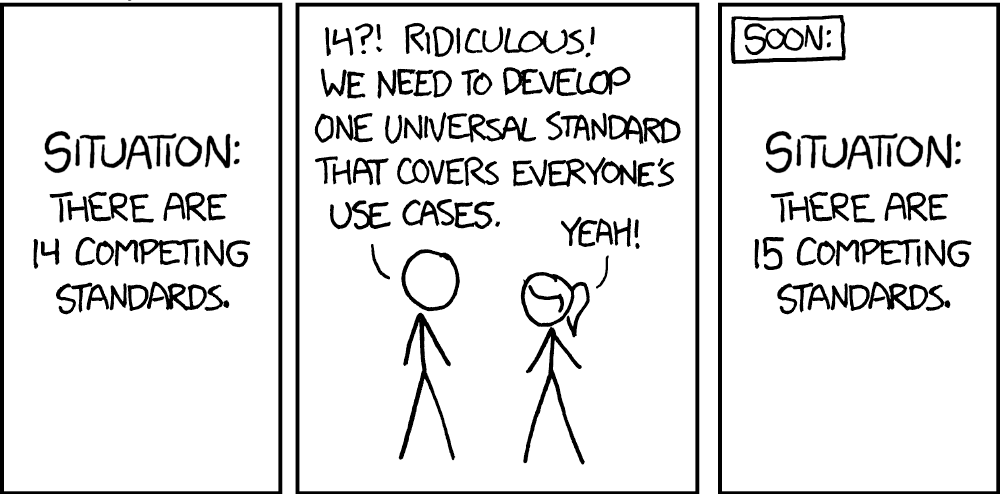
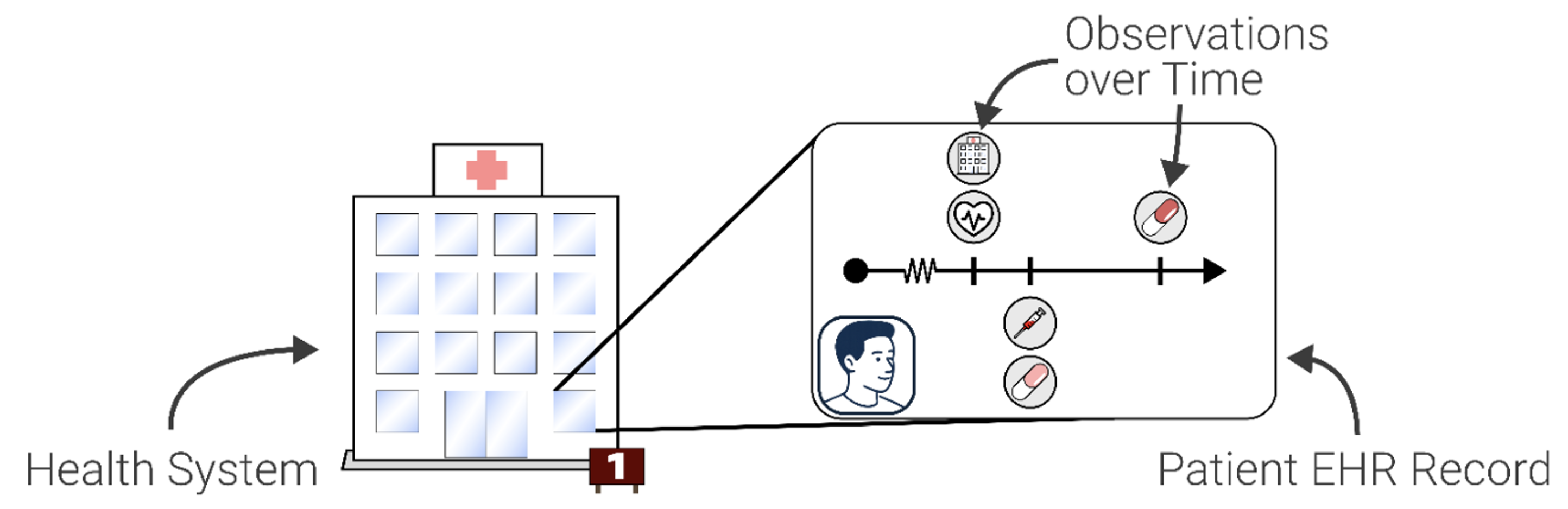
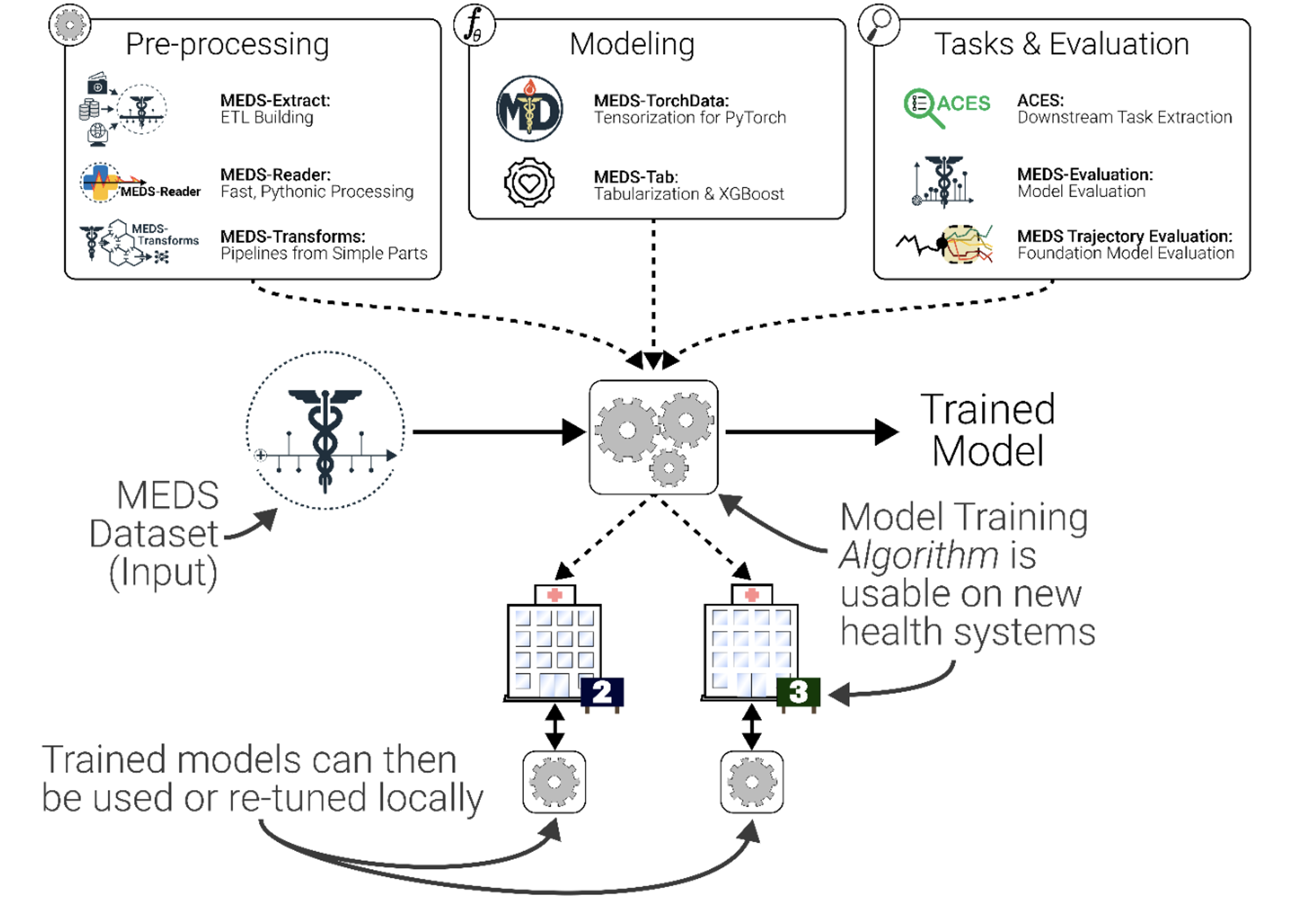
MEDS: Medical Event Data Standard 3

Data Standards in Healthcare

Source: https://xkcd.com/927/

  • OMOP 1, PCORnet 2, FHIR3, and i2b24.
  • Have enabled observational studies and health data exchange 5.
  • But, they are not designed for high-parameter AI research.

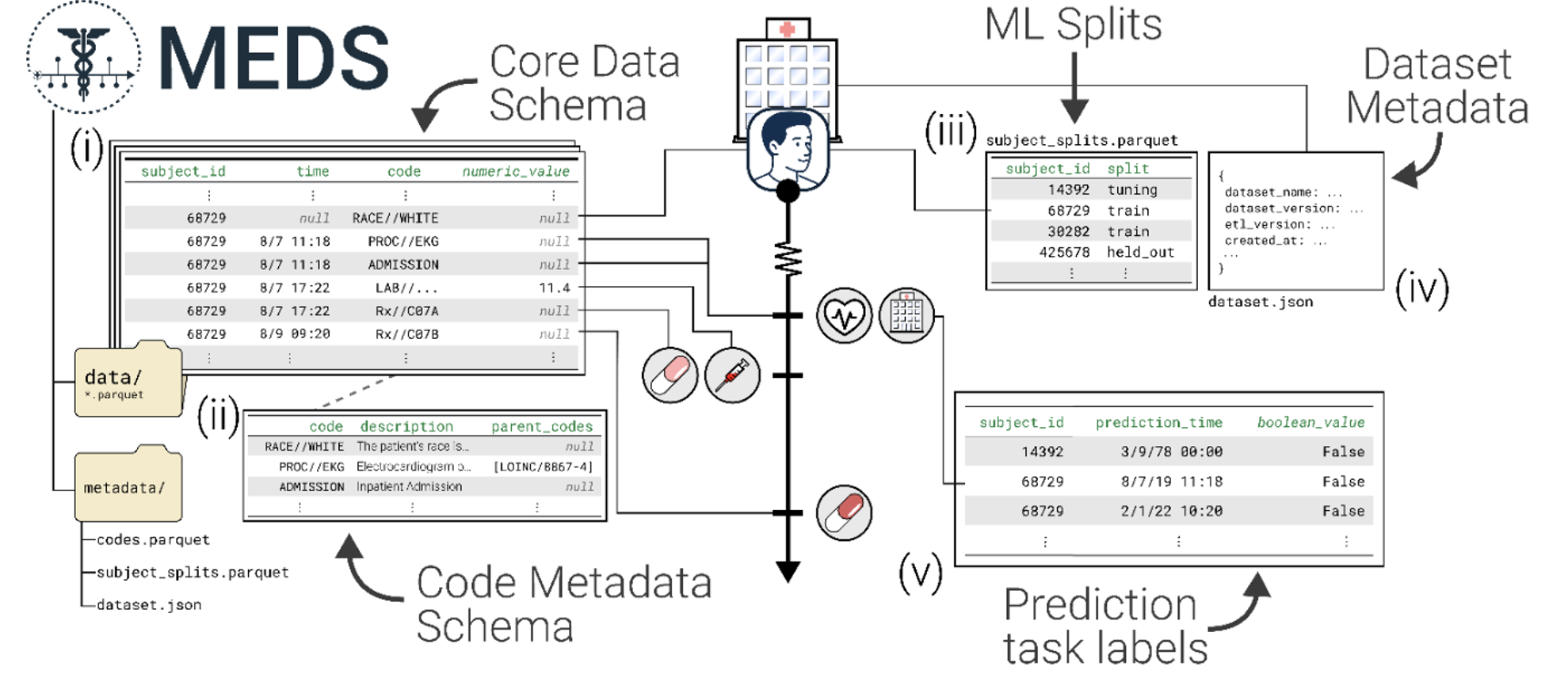
The Medical Event Data Standard (MEDS)

  • ML-First: not observational research.
  • Flexible: adapts to data source and research needs.
  • Event-Based: longitudinal healthcare data.
  • Interoperable: tools composable across settings.

Adapted from McDermott et al. “MEDS: An Emerging Data Standard and Ecosystem for Health AI Research” Accepted to NEJM AI (2026), to appear in vol:3, iss:6 (2026).

MEDS-DEV: Decentralized External Validation

  • Reproducible benchmarking is critical for scientific progress.
  • Sharing raw patient data across institutions is often not possible due to privacy concerns.

Define standardized predicates for tasks and have drop-in definitions for each dataset1.

9 Datasets (1 private, 8 open-access)

11 Tasks

3 Models2

Grouping by dataset and model:

Grouping by task and model:

No domination of one model across datasets and tasks.

Foundation Models for Health Systems

1

What Can We Do With Foundation Models?

  • Train SOTA FMs1, CEHR-XGPT2 and MOTOR3, on entire MSHS (5.5M patients).
  • Embed a variety of patient representations until prediction time.
  • Linear probing: train a linear classifier on top of frozen FM representations.
  • Effect of sample size on performance:

→ For small sample sizes, FM representations can outperform existing machine learning models.

→ Cheaper than finetuning, and proxy for quality of the foundation model representations for downstream tasks.

→ FM-generated representations can provide a useful starting point for specialty AI-applications.

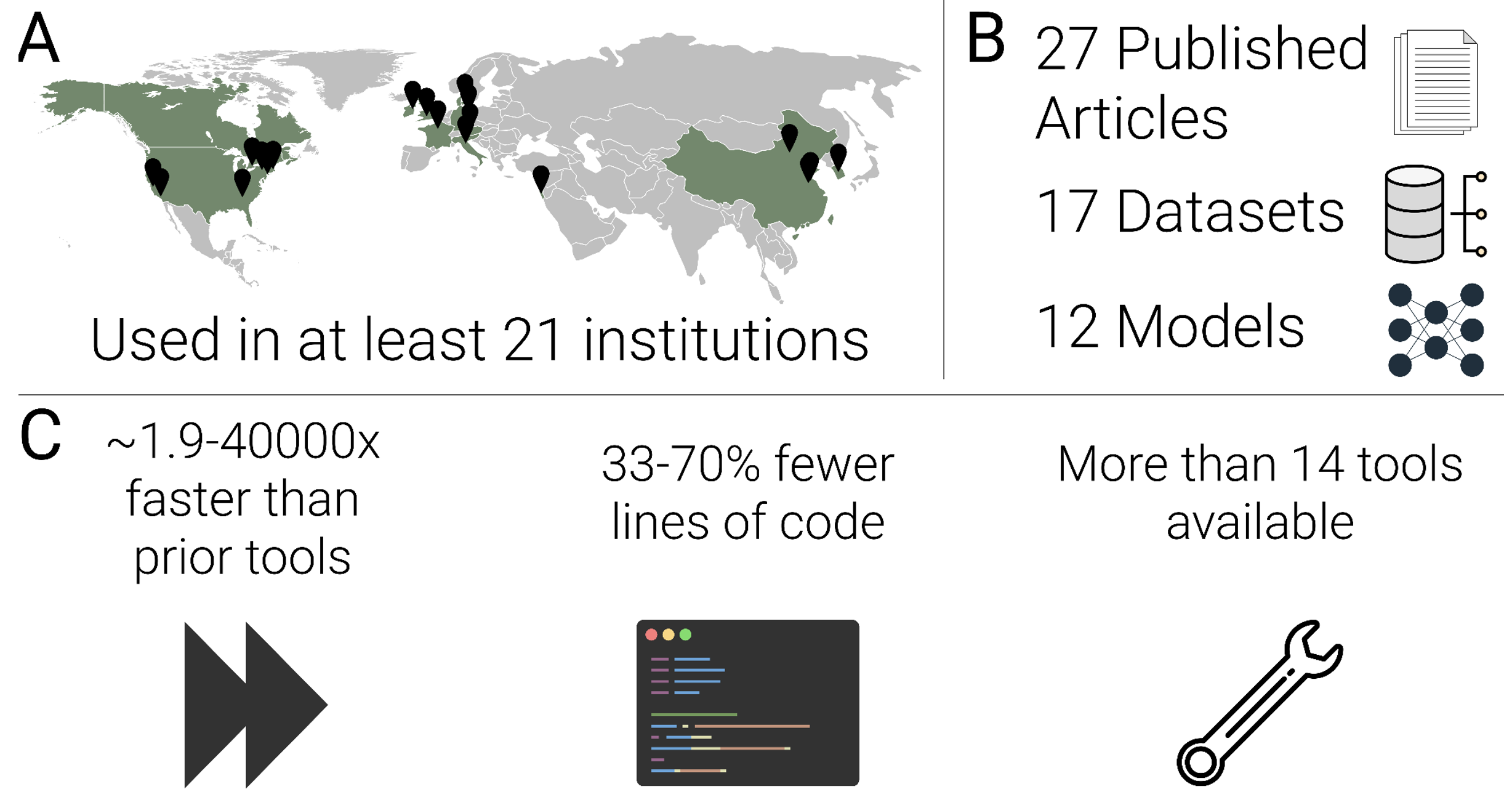
MEDS: Community Adoption

Adapted from McDermott et al. “MEDS: An Emerging Data Standard and Ecosystem for Health AI Research” Accepted to NEJM AI (2026), to appear in vol:3, iss:6 (2026).

💡 MEDS seems to meet Health AI community’s needs.

Discussion and Impact

Discussion and Impact

→ Continuous wearable data nearly doubles AUPRC.

→ Wearables provides physiological insights.

Predictive surveillance can be extended to the ward. → First author for largest surgical wearable-enabled prospective cohort.

→ Experimental setup often matters more than model choice.

→ Harmonizing data provides external validation and fine-tunable models.

→ Multi-center framework for reproducible ML4H (44 cit., GH 97 ⭐).

→ Co-founder of MEDS: enables AI research across health systems.

→ Created 4 Dataset, OMOP, FHIR ETLs and 3 tools.

→ MEDS-DEV: Scaled cross-institutional benchmarks.

Adoption across the community (87 agg. cit.; 113 GH followers).

Limitations

Amplification of existing racial, gender, and socioeconomic biases.1

Need validation strategies and randomized trials before deployment.2

Need for causal approaches to improve theoretical validity. 3

(Large) AI models have environmental impact and are “black boxes”.4

Future Research Directions

Advances in multi-modal health Foundation Models.

Generalizability of Foundation Models in health.1

Scaling up: datasets, model size, benchmarking.2

Predictive surveillance and transferable patient representations.3

People slide
People slide
People slide
People slide
People slide
People slide
People slide
People slide
People slide

Acknowledgements

All friends, colleagues, mentors, collaborators, reviewers, and family who supported me.

HPI:

  • Comittee: Christoph Lippert, Lothar Wieler, Felix Naumann, Gerard de Melo, Bernhard Renard
  • Executive assistants: Edit Tatar, Cornelia Philippson, Katharina Lorenz-Schroeder, Lena Kaese.
  • Students: Hendrik Schmidt, Daniela Zuluaga Lotero, Youssef Mecky

HPI:

  • All people in the Digital Health - Connected Healthcare/Machine Learning groups and the Digital Health Cluster

Charité:

  • Max M. Maurer
  • Axel Winter
  • Daniela Zuluaga Lotero

Mentors and Collaborators:

  • Patrick Rockenschaub (Medical University of Vienna)
  • Matthew McDermott (Columbia University)
  • Eugenia Alleva (Mount Sinai)
  • Thomas Sutter (ETH Zurich)

Reviewers:

  • Padhraic Smyth (UC Irvine)
  • Mykola Pechenizkiy (TU Eindhoven)

I am sure I forgot people here..

References

[1]. Rossetti, Sarah C., Patricia C. Dykes, Chris Knaplund, Sandy Cho, Jennifer Withall, Graham Lowenthal, David Albers, Rachel Y. Lee, Haomiao Jia, et al. (2025). Real-time surveillance system for patient deterioration: A pragmatic cluster-randomized controlled trial.” Nature Medicine, 31(6), 1895–1902. Nature Publishing Group.
[2]. Health, Center for Devices and Radiological. (Tue, 03/10/2026 - 09:05). Artificial Intelligence-Enabled Medical Devices.” FDA. FDA.
[3]. Apell, Petra, Sara Locher, Annie Milde, and Henrik Eriksson. (2026). Explaining the Slow Adoption of AI Innovations in Health Care: Network Analysis Approach.” JMIR AI, 5(1), e60458. JMIR Publications Inc., Toronto, Canada.
[4]. Henzler, Dennis, Sebastian Schmidt, Ayca Koçar, Sophie Herdegen, Georg L. Lindinger, Menno T. Maris, Marieke A. R. Bak, Dick L. Willems, Hanno L. Tan, et al. (2025). Healthcare professionals’ perspectives on artificial intelligence in patient care: A systematic review of hindering and facilitating factors on different levels.” BMC Health Services Research, 25(1), 633.
[5]. Agniel, Denis, Isaac S. Kohane, and Griffin M. Weber. (2018). Biases in electronic health record data due to processes within the healthcare system: Retrospective observational study.” BMJ, 361), k1479. British Medical Journal Publishing Group.
[6]. Futoma, Joseph, Morgan Simons, Trishan Panch, Finale Doshi-Velez, and Leo Anthony Celi. (2020). The myth of generalisability in clinical research and machine learning in health care.” The Lancet Digital Health, 2(9), e489–e492. Elsevier.
[7]. McDermott, Matthew. (2025). The (lack of?) Science of Machine Learning for Healthcare.” Proceedings of the 4th Machine Learning for Health Symposium, 19–29. PMLR.
[8]. Donoho, David. (2024). Data Science at the Singularity.” Harvard Data Science Review, 6(1). The MIT Press.
[9]. Van Calster, Ben, Ewout W. Steyerberg, Laure Wynants, and Maarten van Smeden. (2023). There is no such thing as a validated prediction model.” BMC Medicine, 21(1), 70.
[10]. Abramoff, Michael D., Tinglong Dai, and James Zou. (2024). Scaling Adoption of Medical AIReimbursement from Value-Based Care and Fee-for-Service Perspectives.” NEJM AI, 1(5), AIpc2400083. Massachusetts Medical Society.
[11]. Mariano, Bernardo. (2020). Towards a global strategy on digital health.” Bulletin of the World Health Organization, 98(4), 231–231A.
[12]. Van de Water, Robin P., Axel Winter, Daniela Zuluaga Lotero, Bjarne Pfitzner, Lara Faraj, Bert Arnrich, Patrick Rockenschaub, Wenzel Schoning, Thomas Malinka, et al. (2025). Continuous Multimodal AI with Wearable Vital Signs Predicts Postoperative Complications in the General Ward.” Medrxiv preprint; Submitted to Lancet Digital Health, 2025.11.25.25340950.
[13]. Riepe, Christoph, Robin van de Water, Axel Winter, Bjarne Pfitzner, Lara Faraj, Robert Ahlborn, Maximilian Schulze, Daniela Zuluaga, Christian Schineis, et al. (2025). 90-day mortality prediction in elective visceral surgery using machine learning: A retrospective multicenter development, validation, and comparison study.” International Journal of Surgery, 111(6), 3742.
[14]. Van de Water, Robin, Axel Winter, Max M. Maurer, Felix August Treykorn, Daniela Zuluaga, Bjarne Pfitzner, Igor M. Sauer, and Bert Arnrich. (2024). Combining Hospital-grade Clinical Data and Wearable Vital Sign Monitoring to Predict Surgical Complications.”
[15]. Van de Water, Robin, Axel Winter, Max M. Maurer, Felix August Treykorn, Bjarne Pfitzner, Igor M. Sauer, and Bert Arnrich. (2024). Combining Time Series Modalities to Create Endpoint-driven Patient Records.”
[16]. Van de Water, Robin P., Hendrik Schmidt, and Patrick Rockenschaub. (2026). ReciPies: A lightweight data transformation pipeline for reproducible ML.” Journal of Open Source Software, 11(117), 9261. The Open Journal.
[17]. Van de Water, Robin, Hendrik Nils Aurel Schmidt, Paul Elbers, Patrick Thoral, Bert Arnrich, and Patrick Rockenschaub. (2024). Yet Another ICU Benchmark: A Flexible Multi-Center Framework for Clinical ML.” Proceedings of The Twelfth International Conference on Learning Representations.
[18]. McDermott, Matthew, Ethan Steinberg, Jason Fries, Robin van de Water, Chao Pang, Patrick Rockenschaub, Pawel Renc, Jungwoo Oh, Kamilė Stankevičiūtė, et al. (2025). MEDS: An Emerging Data Standard and Ecosystem for Health AI Research.” Accepted to New England Journal Of Medicine (NEJM) AI (2026) vol: 3, issue 6.
[19]. van de Water, Robin (MEDS Working Group), Matthew B. A. McDermott, and Jason A. Fries. (2024). Medical Event Data Standard (MEDS): Facilitating Machine Learning for Health.” ICLR 2024 workshop on learning from time series for health.
[20]. McDermott, Matthew B. A., Aleksia Kolo, Chao Pang, Edward Choi, Ethan Steinberg, Hyewon Jeong, Jack Gallifant, Jason Alan Fries, Jeffrey N. Chiang, et al. (2024). MEDS Decentralized, Extensible Validation (MEDS-DEV) Benchmark: Establishing Reproducibility and Comparability in ML for Health.” Machine Learning for Health (ML4H), 15-16 December 2024, Vancouver, Canada.
[21]. McDermott, Matthew B. A., Justin Xu, Teya S. Bergamaschi, Hyewon Jeong, Simon A. Lee, Nassim Oufattole, Patrick Rockenschaub, Kamilė Stankevičiūtė, Ethan Steinberg, et al. (2025). MEDS: Building Models and Tools in a Reproducible Health AI Ecosystem.” Proceedings of the 31st ACM SIGKDD Conference on Knowledge Discovery and Data Mining V.2, 6243–6244. ACM.
[22]. Van de Water, Robin P. (2025). Scaling Up Clinical ML from Datasets to Entire Health Systems through the MEDS Ecosystem.”
[23]. Kirchler, Matthias, Matteo Ferro, Veronica Lorenzini, Robin van de Water, Christoph Lippert, and Andrea Ganna. (2025). Large language models improve transferability of electronic health record-based predictions across countries and coding systems.” Accepted to npj Digital Medicine.
[24]. Alefs, Katharina, Susanne Ibing, Pia Francesca Rissom, Jan Carlo Schmid, Arkadiusz Kwasigroch, Robin van de Water, Bernhard Y. Renard, and Eugenia Alleva. (2025). Towards Foundation Model-Based Propensity Score Matching from Electronic Health Records.”
[25]. Pfitzner, Bjarne, Max M. Maurer, Axel Winter, Christoph Riepe, Igor M. Sauer, Robin van de Water, Christian Denecke, Johann Pratschke, and Bert Arnrich. (2025). Differentially-Private Federated Learning with Non-IID Data For Surgical Risk Prediction. International Journal of Semantic Computing, 19(3).
[26]. Winter, Axel, Bjarne Pfitzner, Robin P. van de Water, Lara Faraj, Christoph Riepe, Wolf-Heinrich Hahn, Felix Krenzien, Christian Schineis, Thomas Malinka, et al. (2025). Overcoming the data barrier: Transfer learning for 90-day mortality prediction in general surgery–a retrospective multicenter development and comparison study.” International Journal of Surgery, 10–1097. LWW.
[27]. Van de Water, Robin Philippus, Ethan Steinberg, Michael Wornow, Patrick Rockenschaub, and Matthew McDermott. (2025). MIMIC-IV demo data in the Medical Event Data Standard (MEDS).” PhysioNet.
[28]. Maurer, Max M., Bjarne Pfitzner, Robin P. van de Water, Lara Faraj, Christoph Riepe, Daniela Zuluaga, Felix Krenzien, Nathanael Raschzok, Robert Siegel, et al. (2025). Privacy preserving federated learning for 90-day mortality prediction in colorectal surgery: A multicenter retrospective development and comparison study.” International Journal of Surgery (London, England).
[29]. Winter, Axel, Robin P. van de Water, Bjarne Pfitzner, Marius Ibach, Christoph Riepe, Robert Ahlborn, Lara Faraj, Felix Krenzien, Eva M. Dobrindt, et al. (2024). Enhancing Preoperative Outcome Prediction: A Comparative Retrospective CaseControl Study on Machine Learning versus the International Esodata Study Group Risk Model for Predicting 90-Day Mortality in Oncologic Esophagectomy.” Cancers, 16(17), 3000. MDPI.
[30]. Pfitzner, Bjarne, Max M. Maurer, Axel Winter, Christoph Riepe, Igor M. Sauer, Robin van de Water, and Bert Arnrich. (2024). Differentially-Private Federated Learning with Non-IID Data for Surgical Risk Prediction.” 2024 IEEE First International Conference on Artificial Intelligence for Medicine, Health and Care (AIMHC), 120–129. IEEE.
[31]. Konak, Orhan, Robin van de Water, Valentin Döring, Tobias Fiedler, Lucas Liebe, Leander Masopust, Kirill Postnov, Franz Sauerwald, Felix Treykorn, et al. (2023). HARE: Unifying the Human Activity Recognition Engineering Workflow.” Sensors, 23(23), 9571. MDPI.
[32]. Konak, Orhan, Alexander Wischmann, Robin van de Water, and Bert Arnrich. (2023). A Real-time Human Pose Estimation Approach for Optimal Sensor Placement in Sensor-based Human Activity Recognition.” Proceedings of the 8th international Workshop on Sensor-Based Activity Recognition and Artificial Intelligence, 1–6. ACM.
[33]. Van de Water, Robin, Francesco Ventura, Zoi Kaoudi, Jorge-Arnulfo Quiane-Ruiz, and Volker Markl. (2022). Farming Your ML-based Query Optimizer’s Food.” 2022 IEEE 38th International Conference on Data Engineering (ICDE), 3186–3189. IEEE.
[34]. Van de Water, Robin, Francesco Ventura, Z Kaoudi, J Quiane-Ruiz, and Volker Markl. (2022). Farm your ML-based query optimizer’s Food!–Human-Guided training data generation–.” Conference on Innovative Data Systems Research (CIDR).
[35]. Maas, Lientje, Mathan Geurtsen, Florian Nouwt, Stefan F. Schouten, Robin van de Water, Sandra Van Dulmen, Fabiano Dalpiaz, Kees Van Deemter, and Sjaak Brinkkemper. (2020). The Care2Report System: Automated Medical Reporting as an Integrated Solution to Reduce Administrative Burden in Healthcare. HICSS, 1–10.
[36]. Schmid, Jan Carlo, Susanne Ibing, Stefan Kalabakov, Katharina Alefs, Robin P. van de Water, Arkadiusz Kwasigroch, Eugenia Alleva, Bert Arnrich, Bernhard Y. Renard, et al. (2025). Expert-defined, chart-reviewed features outperform EHR foundation models for predicting crohn’s-like disease of the pouch.” Under review at The American Journal of Gastroenterology.
[37]. Turubayev, Alisher, Anna Shopova, Fabian Lange, Mahmut Kamalak, Paul Mattes, Victoria Ayvasky, Bert Arnrich, Bjarne Pfitzner, and Robin P. van de Water. (2025). Closing Gaps: An Imputation Analysis of ICU Vital Signs.”
[38]. Dobson, Geoffrey P. (2020). Trauma of major surgery: A global problem that is not going away.” International Journal of Surgery (London, England), 81), 47–54.
[39]. Shrime, Mark G, Stephen W Bickler, Blake C Alkire, and Charlie Mock. (2015). Global burden of surgical disease: An estimation from the provider perspective.” The Lancet Global Health, 3), S8–S9.
[40]. Downey, Candice L., Jamie Bainbridge, David G. Jayne, and David M. Meads. (2023). Impact of in-hospital postoperative complications on quality of life up to 12 months after major abdominal surgery.” The British Journal of Surgery, 110(9), 1206–1212.
[41]. Mualla, Noor M., Maryam R. Hussain, Muhammad Akrmah, Preeti Malik, Sadia Bashir, and Jenny J. Lin. (2021). The Impact of Postoperative Complications on Long-Term Oncological Outcomes Following Curative Resection of Colorectal Cancer (Stage I-III): A Systematic Review and Meta-Analysis.” Cureus, 13(1), e12837.
[42]. Baum, Philip, Johannes Diers, Sven Lichthardt, Carolin Kastner, Nicolas Schlegel, Christoph-Thomas Germer, and Armin Wiegering. (2019). Mortality and Complications Following Visceral Surgery.” Deutsches Ärzteblatt international.
[43]. Roppelt, Julia Stefanie, Dominik K. Kanbach, and Sascha Kraus. (2024). Artificial intelligence in healthcare institutions: A systematic literature review on influencing factors.” Technology in Society, 76), 102443.
[44]. Stam, Wessel T, Lotte K Goedknegt, Erik W Ingwersen, Linda J Schoonmade, Emma R J Bruns, and Freek Daams. (2022). The prediction of surgical complications using artificial intelligence in patients undergoing major abdominal surgery: A systematic review. Surgery, 171(4), 1014–1021.
[45]. Van de Water, Robin, Axel Winter, Max M. Maurer, Felix August Treykorn, Daniela Zuluaga, Bjarne Pfitzner, Igor M. Sauer, and Bert Arnrich. (2024). Combining Hospital-grade Clinical Data and Wearable Vital Sign Monitoring to Predict Surgical Complications.”
[46]. Moor, Michael, Bastian Rieck, Max Horn, Catherine R. Jutzeler, and Karsten Borgwardt. (2021). Early Prediction of Sepsis in the ICU Using Machine Learning: A Systematic Review.” Frontiers in Medicine, 8).
[47]. Fleuren, Lucas M., Thomas L. T. Klausch, Charlotte L. Zwager, Linda J. Schoonmade, Tingjie Guo, Luca F. Roggeveen, Eleonora L. Swart, Armand R. J. Girbes, Patrick Thoral, et al. (2020). Machine learning for the prediction of sepsis: A systematic review and meta-analysis of diagnostic test accuracy.” Intensive Care Medicine, 46(3), 383–400.
[48]. Shillan, Duncan, Jonathan A. C. Sterne, Alan Champneys, and Ben Gibbison. (2019). Use of machine learning to analyse routinely collected intensive care unit data: A systematic review.” Critical Care, 23(1), 284.
[49]. Johnson, Alistair E. W., Lucas Bulgarelli, Lu Shen, Alvin Gayles, Ayad Shammout, Steven Horng, Tom J. Pollard, Benjamin Moody, Brian Gow, et al. (2023). MIMIC-IV, a freely accessible electronic health record dataset.” Scientific Data, 10(1), 1.
[50]. Seymour, Christopher W., Vincent X. Liu, Theodore J. Iwashyna, Frank M. Brunkhorst, Thomas D. Rea, André Scherag, Gordon Rubenfeld, Jeremy M. Kahn, Manu Shankar-Hari, et al. (2016). Assessment of Clinical Criteria for Sepsis: For the Third International Consensus Definitions for Sepsis and Septic Shock (Sepsis-3).” JAMA, 315(8), 762.
[51]. Moor, Michael, Nicolas Bennet, Drago Plecko, Max Horn, Bastian Rieck, Nicolai Meinshausen, Peter Bühlmann, and Karsten Borgwardt. (2021). Predicting sepsis in multi-site, multi-national intensive care cohorts using deep learning.”
[52]. Calvert, Jacob S., Daniel A. Price, Uli K. Chettipally, Christopher W. Barton, Mitchell D. Feldman, Jana L. Hoffman, Melissa Jay, and Ritankar Das. (2016). A computational approach to early sepsis detection.” Computers in Biology and Medicine, 74), 69–73.
[53]. Bommasani, Rishi, Drew A. Hudson, Ehsan Adeli, Russ Altman, Simran Arora, Sydney von Arx, Michael S. Bernstein, Jeannette Bohg, Antoine Bosselut, et al. (2021). On the Opportunities and Risks of Foundation Models.”
[54]. Steinberg, Ethan, Ken Jung, Jason A. Fries, Conor K. Corbin, Stephen R. Pfohl, and Nigam H. Shah. (2021). Language models are an effective representation learning technique for electronic health record data.” Journal of Biomedical Informatics, 113), 103637.
[55]. Hripcsak, George, Jon D Duke, Nigam H Shah, Christian G Reich, Vojtech Huser, Martijn J Schuemie, Marc A Suchard, Rae Woong Park, Ian Chi Kei Wong, et al. (2015). Observational Health Data Sciences and Informatics (OHDSI): Opportunities for Observational Researchers.” Studies in health technology and informatics, 216), 574–578.
[56]. Collins, Francis S, Kathy L Hudson, Josephine P Briggs, and Michael S Lauer. (2014). PCORnet: Turning a dream into reality.” Journal of the American Medical Informatics Association, 21(4), 576–577.
[57]. Bender, Duane, and Kamran Sartipi. (2013). HL7 FHIR: An Agile and RESTful approach to healthcare information exchange.” Proceedings of the 26th IEEE International Symposium on Computer-Based Medical Systems, 326–331.
[58]. Murphy, Shawn N, Griffin Weber, Michael Mendis, Vivian Gainer, Henry C Chueh, Susanne Churchill, and Isaac Kohane. (2010). Serving the enterprise and beyond with informatics for integrating biology and the bedside (I2b2).” Journal of the American Medical Informatics Association, 17(2), 124–130.
[59]. Callahan, Alison, Saurabh Gombar, Eli M Cahan, Kenneth Jung, Ethan Steinberg, Vladimir Polony, Keith Morse, Robert Tibshirani, Trevor Hastie, et al. (2021). Using aggregate patient data at the bedside via an on-demand consultation service.” NEJM Catalyst Innovations in Care Delivery, 2(10). Massachusetts Medical Society.
[60]. Suchard, Marc A, Martijn J Schuemie, Harlan M Krumholz, Seng Chan You, RuiJun Chen, Nicole Pratt, Christian G Reich, Jon Duke, David Madigan, et al. (2019). Comprehensive comparative effectiveness and safety of first-line antihypertensive drug classes: A systematic, multinational, large-scale analysis.” The Lancet, 394(10211), 1816–1826.
[61]. Xu, Justin, Jack Gallifant, Alistair Johnson, and Matthew B. A. McDermott. (2024). ACES: Automatic Cohort Extraction System for Event-Stream Datasets.”
[62]. Oufattole, Nassim, Teya Bergamaschi, Aleksia Kolo, Hyewon Jeong, Hanna Gaggin, Collin M. Stultz, and Matthew B. A. McDermott. (2024). MEDS-Tab: Automated tabularization and baseline methods for MEDS datasets.”
[63]. Pang, Chao, Xinzhuo Jiang, Krishna S. Kalluri, Matthew Spotnitz, RuiJun Chen, Adler Perotte, and Karthik Natarajan. (2021). CEHR-BERT: Incorporating temporal information from structured EHR data to improve prediction tasks.”
[64]. Hur, Kyunghoon, Jungwoo Oh, Junu Kim, Jiyoun Kim, Min Jae Lee, Eunbyeol Cho, Seong-Eun Moon, Young-Hak Kim, Louis Atallah, et al. (2024). GenHPF: General Healthcare Predictive Framework for Multi-Task Multi-Source Learning.” IEEE Journal of Biomedical and Health Informatics, 28(1), 502–513.
[65]. Van de Water, Robin P., Katharina Marie Alefs, Susanne Ibing, Stefan Kalabakov, Aadil Rasheed, Pia Francesca Rissom, Jan Carlo Schmid, Arkadiusz Kwasigroch, Eugenia Alleva, et al. (2025). FLAMES: EHR foundation models as a resource for health systems.”
[66]. Pang, Chao, Vincent Jeanselme, Young Sang Choi, Xinzhuo Jiang, Zilin Jing, Aparajita Kashyap, Yuta Kobayashi, Yanwei Li, Florent Pollet, et al. (2025). FoMoH: A clinically meaningful foundation model evaluation for structured electronic health records.”
[67]. Pang, Chao, Jiheum Park, Xinzhuo Jiang, Nishanth Parameshwar Pavinkurve, Krishna S. Kalluri, Shalmali Joshi, Noémie Elhadad, and Karthik Natarajan. (2025). CEHR-XGPT: A Scalable Multi-Task Foundation Model for Electronic Health Records.”
[68]. Steinberg, Ethan, Jason Alan Fries, Yizhe Xu, and Nigam Shah. (2023). MOTOR: A Time-to-Event Foundation Model For Structured Medical Records.”
[69]. Borges do Nascimento, Israel Júnior, Hebatullah Abdulazeem, Lenny Thinagaran Vasanthan, Edson Zangiacomi Martinez, Miriane Lucindo Zucoloto, Lasse Østengaard, Natasha Azzopardi-Muscat, Tomas Zapata, and David Novillo-Ortiz. (2023). Barriers and facilitators to utilizing digital health technologies by healthcare professionals.” npj Digital Medicine, 6(1), 161. Nature Publishing Group.
[70]. Wong, Andrew, Erkin Otles, John P. Donnelly, Andrew Krumm, Jeffrey McCullough, Olivia DeTroyer-Cooley, Justin Pestrue, Marie Phillips, Judy Konye, et al. (2021). External Validation of a Widely Implemented Proprietary Sepsis Prediction Model in Hospitalized Patients.” JAMA internal medicine, 181(8), 1065–1070.
[71]. Joshi, Shalmali, Iñigo Urteaga, Wouter A C van Amsterdam, George Hripcsak, Pierre Elias, Benjamin Recht, Noémie Elhadad, James Fackler, Mark P Sendak, et al. (2025). AI as an intervention: Improving clinical outcomes relies on a causal approach to AI development and validation.” Journal of the American Medical Informatics Association, 32(3), 589–594.
[72]. Hosseini, Mohammad, Peng Gao, and Carolina Vivas-Valencia. (2025). A social-environmental impact perspective of generative artificial intelligence.” Environmental Science and Ecotechnology, 23), 100520.
[73]. Burkhart, Michael C., Bashar Ramadan, Zewei Liao, Kaveri Chhikara, Juan C. Rojas, William F. Parker, and Brett K. Beaulieu-Jones. (2025). Foundation models for electronic health records: Representation dynamics and transferability.”
[74]. Futoma, Joseph, Morgan Simons, Trishan Panch, Finale Doshi-Velez, and Leo Anthony Celi. (2020). The myth of generalisability in clinical research and machine learning in health care.” The Lancet Digital Health, 2(9), e489–e492. Elsevier.
[75]. Waxler, Shane, Paul Blazek, Davis White, Daniel Sneider, Kevin Chung, Mani Nagarathnam, Patrick Williams, Hank Voeller, Karen Wong, et al. (2025). Generative Medical Event Models Improve with Scale.”
[76]. Zhang, Sheng, Qin Liu, Naoto Usuyama, Cliff Wong, Tristan Naumann, and Hoifung Poon. (2025). Exploring Scaling Laws for EHR Foundation Models.”
[77]. Huang, Hongzhi, Defa Zhu, Banggu Wu, Yutao Zeng, Ya Wang, Qiyang Min, and Zhou Xun. (2025). Over-Tokenized Transformer: Vocabulary is Generally Worth Scaling.”
[78]. Kern, Lisa M., Julie P. W. Bynum, and Harold Alan Pincus. (2024). Care Fragmentation, Care Continuity, and Care CoordinationHow They Differ and Why It Matters.” JAMA internal medicine, 184(3), 236–237.
[79]. Gaffney, Adam, Steffie Woolhandler, David U. Himmelstein, and Danny McCormick. (2025). Health care in the USA: Money has become the mission.” The Lancet, 406(10519), 2588–2600. Elsevier.
[80]. Jang, Eugene. (2025). Oops? Interdisciplinary Stories of Sociotechnical Error| When Faulty AI Falls Into the Wrong Hands: The Risks of Erroneous AI-Driven Healthcare Decisions.” International Journal of Communication, 19), 7–7.
[81]. Chouffani El Fassi, Sammy, Adonis Abdullah, Ying Fang, Sarabesh Natarajan, Awab Bin Masroor, Naya Kayali, Simran Prakash, and Gail E. Henderson. (2024). Not all AI health tools with regulatory authorization are clinically validated.” Nature Medicine, 30(10), 2718–2720. Nature Publishing Group.
[82]. van Amsterdam, Wouter, Michael Kamp, Rajesh Ranganath, Robin P. van de Water, Florian Markowetz, Evangelia Christodoulou, Yamuna Krishnamurthy, Christoph Lippert, Jeff Clark, et al. (2025). Missing incentives, missing oversight: The challenges of AI monitoring in clinical practice.”
[83]. Van Calster, Ben, Laure Wynants, Jan F. M. Verbeek, Jan Y. Verbakel, Evangelia Christodoulou, Andrew J. Vickers, Monique J. Roobol, and Ewout W. Steyerberg. (2018). Reporting and Interpreting Decision Curve Analysis: A Guide for Investigators.” European urology, 74(6), 796–804.
[84]. Lundberg, Scott M, and Su-In Lee. (2017). A unified approach to interpreting model predictions.” Advances in neural information processing systems, 30). Curran Associates, Inc.
[85]. Johnson, Alistair E. W., Tom J. Pollard, Lu Shen, Li-wei H. Lehman, Mengling Feng, Mohammad Ghassemi, Benjamin Moody, Peter Szolovits, Leo Anthony Celi, et al. (2016). MIMIC-III, a freely accessible critical care database.” Scientific Data, 3(1), 160035.
[86]. Pollard, Tom J., Alistair E. W. Johnson, Jesse D. Raffa, Leo A. Celi, Roger G. Mark, and Omar Badawi. (2018). The eICU Collaborative Research Database, a freely available multi-center database for critical care research.” Scientific Data, 5(1), 180178.
[87]. Hyland, Stephanie L. (2020). Early prediction of circulatory failure in the intensive care unit using machine learning.” Nature MedIcIne, 26), 28.
[88]. Thoral, Patrick J., Jan M. Peppink, Ronald H. Driessen, Eric J. G. Sijbrands, Erwin J. O. Kompanje, Lewis Kaplan, Heatherlee Bailey, Jozef Kesecioglu, Maurizio Cecconi, et al. (2021). Sharing ICU Patient Data Responsibly Under the Society of Critical Care Medicine/European Society of Intensive Care Medicine Joint Data Science Collaboration: The Amsterdam University Medical Centers Database (AmsterdamUMCdb) Example*.” Critical Care Medicine, 49(6), e563–e577.
[89]. Baker, Stephanie, Wei Xiang, and Ian Atkinson. (2020). Continuous and automatic mortality risk prediction using vital signs in the intensive care unit: A hybrid neural network approach.” Scientific Reports, 10(1), 21282.
[90]. Lu, Sheng-Chieh, Cai Xu, Chandler H. Nguyen, Yimin Geng, André Pfob, and Chris Sidey-Gibbons. (2022). Machine LearningBased Short-Term Mortality Prediction Models for Patients With Cancer Using Electronic Health Record Data: Systematic Review and Critical Appraisal.” JMIR Medical Informatics, 10(3), e33182. JMIR Publications Inc., Toronto, Canada.
[91]. Medic, Goran, Melodi Kosaner Kließ, Louis Atallah, Jochen Weichert, Saswat Panda, Maarten Postma, and Amer El-Kerdi. (2019). Evidence-based Clinical Decision Support Systems for the prediction and detection of three disease states in critical care: A systematic literature review. F1000Research, 8), 1728.
[92]. Sharma, Alok, Anupam Shukla, Ritu Tiwari, and Apoorva Mishra. (2017). Mortality Prediction of ICU patients using Machine Leaning: A survey.” Proceedings of the International Conference on Compute and Data Analysis - ICCDA ’17, 49–53. ACM Press.
[93]. Syed, Mahanazuddin, Shorabuddin Syed, Kevin Sexton, Hafsa Bareen Syeda, Maryam Garza, Meredith Zozus, Farhanuddin Syed, Salma Begum, Abdullah Usama Syed, et al. (2021). Application of Machine Learning in Intensive Care Unit (ICU) Settings Using MIMIC Dataset: Systematic Review.” Informatics, 8(1), 16.
[94]. Huang, Wei, Yuwen Chen, Peng Wang, Xiang Liu, and Shuguang Liu. (2021). An Interpretable Temporal Convolutional Network Model for Acute Kidney Injury Prediction in the Intensive Care Unit.” 2021 IEEE International Conference on Bioinformatics and Biomedicine (BIBM), 3021–3028.
[95]. Nikkinen, Okke, Timo Kolehmainen, Toni Aaltonen, Elias Jämsä, Seppo Alahuhta, and Merja Vakkala. (2022). Developing a supervised machine learning model for predicting perioperative acute kidney injury in arthroplasty patients.” Computers in Biology and Medicine, 144), 105351.
[96]. Pan, Ziyuan, Hao Du, Kee Yuan Ngiam, Fei Wang, Ping Shum, and Mengling Feng. (2019). A Self-Correcting Deep Learning Approach to Predict Acute Conditions in Critical Care.”
[97]. Rank, Nina, Boris Pfahringer, Jörg Kempfert, Christof Stamm, Titus Kühne, Felix Schoenrath, Volkmar Falk, Carsten Eickhoff, and Alexander Meyer. (2020). Deep-learning-based real-time prediction of acute kidney injury outperforms human predictive performance.” npj Digital Medicine, 3(1), 139.
[98]. Shamout, Farah, Tingting Zhu, and David A. Clifton. (2021). Machine Learning for Clinical Outcome Prediction.” IEEE Reviews in Biomedical Engineering, 14), 116–126.
[99]. Wang, Hui, Fuxing Deng, Buyao Zhang, and Shuangping Zhao. (2020). Real-Time Prediction of AKI Among Middle-Aged and Older in ICU: A Retrospective and Machine Learning Study.” In Review.
[100]. Koyner, Jay L., Kyle A. Carey, Dana P. Edelson, and Matthew M. Churpek. (2018). The Development of a Machine Learning Inpatient Acute Kidney Injury Prediction Model*: Critical Care Medicine, 46(7), 1070–1077.
[101]. Kok, Christopher, V. Jahmunah, Shu Lih Oh, Xujuan Zhou, Raj Gururajan, Xiaohui Tao, Kang Hao Cheong, Rashmi Gururajan, Filippo Molinari, et al. (2020). Automated prediction of sepsis using temporal convolutional network.” Computers in Biology and Medicine, 127), 103957.
[102]. Lauritsen, Simon Meyer, Mads Ellersgaard Kalør, Emil Lund Kongsgaard, Katrine Meyer Lauritsen, Marianne Johansson Jørgensen, Jeppe Lange, and Bo Thiesson. (2020). Early detection of sepsis utilizing deep learning on electronic health record event sequences.” Artificial Intelligence in Medicine, 104), 101820.
[103]. Merath, Katiuscha, J. Madison Hyer, Rittal Mehta, Ayesha Farooq, Fabio Bagante, Kota Sahara, Diamantis I. Tsilimigras, Eliza Beal, Anghela Z. Paredes, et al. (2020). Use of Machine Learning for Prediction of Patient Risk of Postoperative Complications After Liver, Pancreatic, and Colorectal Surgery.” Journal of Gastrointestinal Surgery, 24(8), 1843–1851.
[104]. Fleuren, Lucas M., Patrick Thoral, Duncan Shillan, Ari Ercole, Paul W. G. Elbers, Mark Hoogendoorn, Ben Gibbison, Thomas L. T. Klausch, Tingjie Guo, et al. (2020). Machine learning in intensive care medicine: Ready for take-off? Intensive Care Medicine, 46(7), 1486–1488.
[105]. Moor, Michael, Max Horn, Bastian Rieck, Damian Roqueiro, and Karsten Borgwardt. (2019). Early Recognition of Sepsis with Gaussian Process Temporal Convolutional Networks and Dynamic Time Warping.” Proceedings of the 4th Machine Learning for Healthcare Conference, 2–26. PMLR.
[106]. Muralitharan, Sankavi, Walter Nelson, Shuang Di, Michael McGillion, Pj Devereaux, Neil Grant Barr, and Jeremy Petch. (2021). Machine LearningBased Early Warning Systems for Clinical Deterioration: Systematic Scoping Review.” Journal of Medical Internet Research, 23(2), e25187.
[107]. Reyna, Matthew A, Chris Josef, Salman Seyedi, Russell Jeter, Supreeth P Shashikumar, M Brandon Westover, Ashish Sharma, Shamim Nemati, and Gari D Clifford. (2019). Early Prediction of Sepsis from Clinical Data: The PhysioNet/Computing in Cardiology Challenge 2019.” 2019 Computing in Cardiology (CinC), Page 1–Page 4.
[108]. Wang, Yuqing, Yun Zhao, Rachael Callcut, and Linda Petzold. (2022). Integrating Physiological Time Series and Clinical Notes with Transformer for Early Prediction of Sepsis.”
[109]. Tomašev, Nenad, Xavier Glorot, Jack W. Rae, Michal Zielinski, Harry Askham, Andre Saraiva, Anne Mottram, Clemens Meyer, Suman Ravuri, et al. (2019). A clinically applicable approach to continuous prediction of future acute kidney injury.” Nature, 572(7767, 7767), 116–119. Nature Publishing Group.
[110]. Futoma, Joseph, Mark Sendak, Blake Cameron, and Katherine Heller. (2016). Predicting Disease Progression with a Model for Multivariate Longitudinal Clinical Data.” Proceedings of the 1st Machine Learning for Healthcare Conference, 42–54. PMLR.
[111]. Perotte, Adler, Rajesh Ranganath, Jamie S Hirsch, David Blei, and Noémie Elhadad. (2015). Risk prediction for chronic kidney disease progression using heterogeneous electronic health record data and time series analysis.” Journal of the American Medical Informatics Association : JAMIA, 22(4), 872–880.
[112]. Cheng, Peng, Lemuel R. Waitman, Yong Hu, and Mei Liu. (2018). Predicting Inpatient Acute Kidney Injury over Different Time Horizons: How Early and Accurate? AMIA Annual Symposium Proceedings, 2017), 565–574.
[113]. Shillan, Duncan, Jonathan A. C. Sterne, Alan Champneys, and Ben Gibbison. (2019). Use of machine learning to analyse routinely collected intensive care unit data: A systematic review.” Critical Care, 23(1), 284.
[114]. Guo, Chonghui, Menglin Lu, and Jingfeng Chen. (2020). An evaluation of time series summary statistics as features for clinical prediction tasks.” BMC Medical Informatics and Decision Making, 20(1), 48.
[115]. Maaten, Laurens van der, and Geoffrey Hinton. (2008). Visualizing Data using t-SNE.” Journal of Machine Learning Research, 9(86), 2579–2605.

Extra Slides: Motivation

V’s of Big Data in Health

V Description Health Data
Volume Amount of data Millions of patient records, lab results, notes, and images
Variety Different types and sources of data Structured (labs, meds), unstructured (notes), time series (vitals), images, genomics
Velocity Speed at which data is generated and processed Real-time vital signs, continuous monitoring, frequent updates
Veracity Data quality, accuracy, and trustworthiness Missing values, errors in coding, inconsistent documentation
Value Usefulness of data for insights and decision-making Predicting patient deterioration, supporting clinical decisions
Variability Changes in meaning/context, heterogeneity across sources Different EHR systems, varying clinical workflows, evolving coding standards

AI Mixed Success

- Need for oversight (e.g., insurance discrimination, surveillance).1 2

Not All AI Tools are Clinically Validated

1

Causal Effects of AI Interventions

1

Stakeholder Incentives and Monitoring Gaps

  • AI model vendors: Driven to show ROI and avoid bad press; monitoring resources are inconsistent.
  • Hospitals/health systems: Value efficiency, cost, and safety; ROI is hard to quantify and infra is uneven.
  • Clinicians: Care about outcomes but have limited time and support for monitoring.
  • AI researchers/architects: Interested in long-term performance, but funding and incentives favor publications.
  • Patients: Most affected, yet lack information and avenues to act. 1

Extra Slides: C1: 🛏️ Multi-modal Early Warning Systems

Cohort Selection

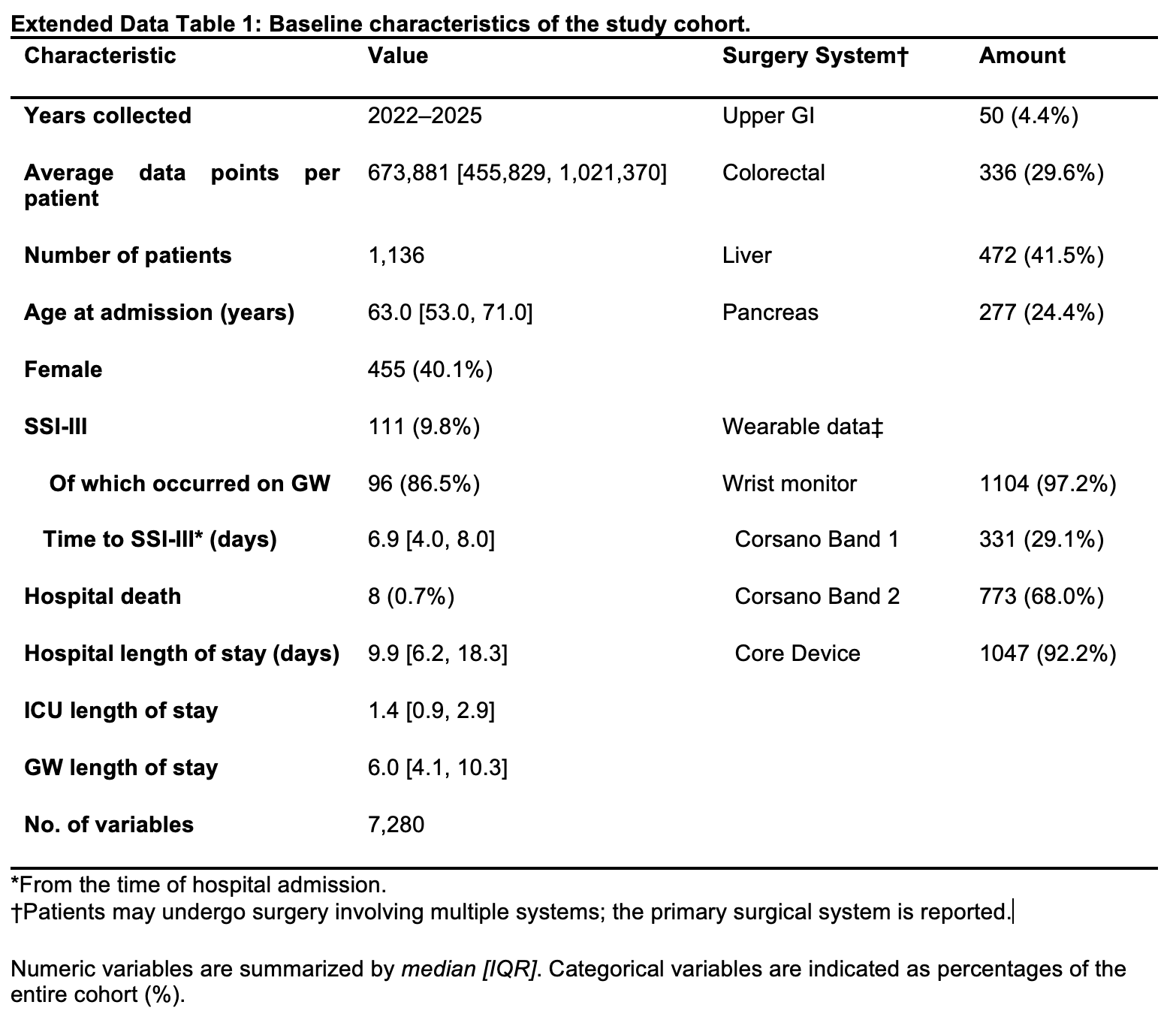
Cohort Characteristics

Pipeline

Alarm Strategy and Decision Curve Analysis

  • CASHEWS+ reduces alarm burden maintaining precision using alarm strategies1.
  • Decision curve analysis2: how much harm am I willing to accept?

Warning system example

Model Comparison

Model Interpretation Grouped by Modality

Fold-averaged, normalized, grouped model attributions according to Shapley values1:

  • Clinician: subtle physiological changes indicate early autonomic stress and neurocardiovascular dysregulation.
  • Wearables: core temperature, HRV features, and PPG embeddings are top contributors.

Model Explainability Subgrouped by Modality

Alarm Strategy and Decision Curve Analysis

Alarm burden and precision-recall

  • Alarm strategy1: CASHEWS+ balances sensitivity and alarm burden
  • Decision curve analysis 2: how much harm am I willing to accept?

Why This Matters: The Gap Between Research and Practice

Lesson Learned: Prospective studies reveal what retrospective studies miss

Aspect Retrospective Prospective
Data quality Pre-existing, variable Controlled, standardized
Timing Fixed (events already occurred) Real-time (can intervene)
Causal inference Confounded Can design for causality
Clinical relevance Varies by hospital Context-specific
Generalization Hard to assess Direct validation possible

Result: Our prospective CASSANDRA study found that hybrid monitoring (ICU + GW wearables) significantly improves early detection of postoperative complications, which retrospective analyses failed to capture.

The Clinical Deployment Gap

ICU General Ward (GW)
Monitoring Frequency High (vital signs every 1-5 minutes) Sporadic (every shift/8 hours)
Intervention Capability Immediate Delayed
Staffing & Resources High Lower, different patterns
Anomaly Detection Early, rapid response possible Often delayed, higher advanced complication rates

Feature Count Ablation

Model Comparison

Embeddings Notes

Embeddings Medications

Intake distribution

Extra Slides: C2: 🧪 Experiment Reproducibility

The YAIB Experimental Pipeline

Creation of harmonized cohorts
Benchmarking Framework

ReciPies: A Simple Modular Preprocessing Framework for ML Research

ReciPies Example

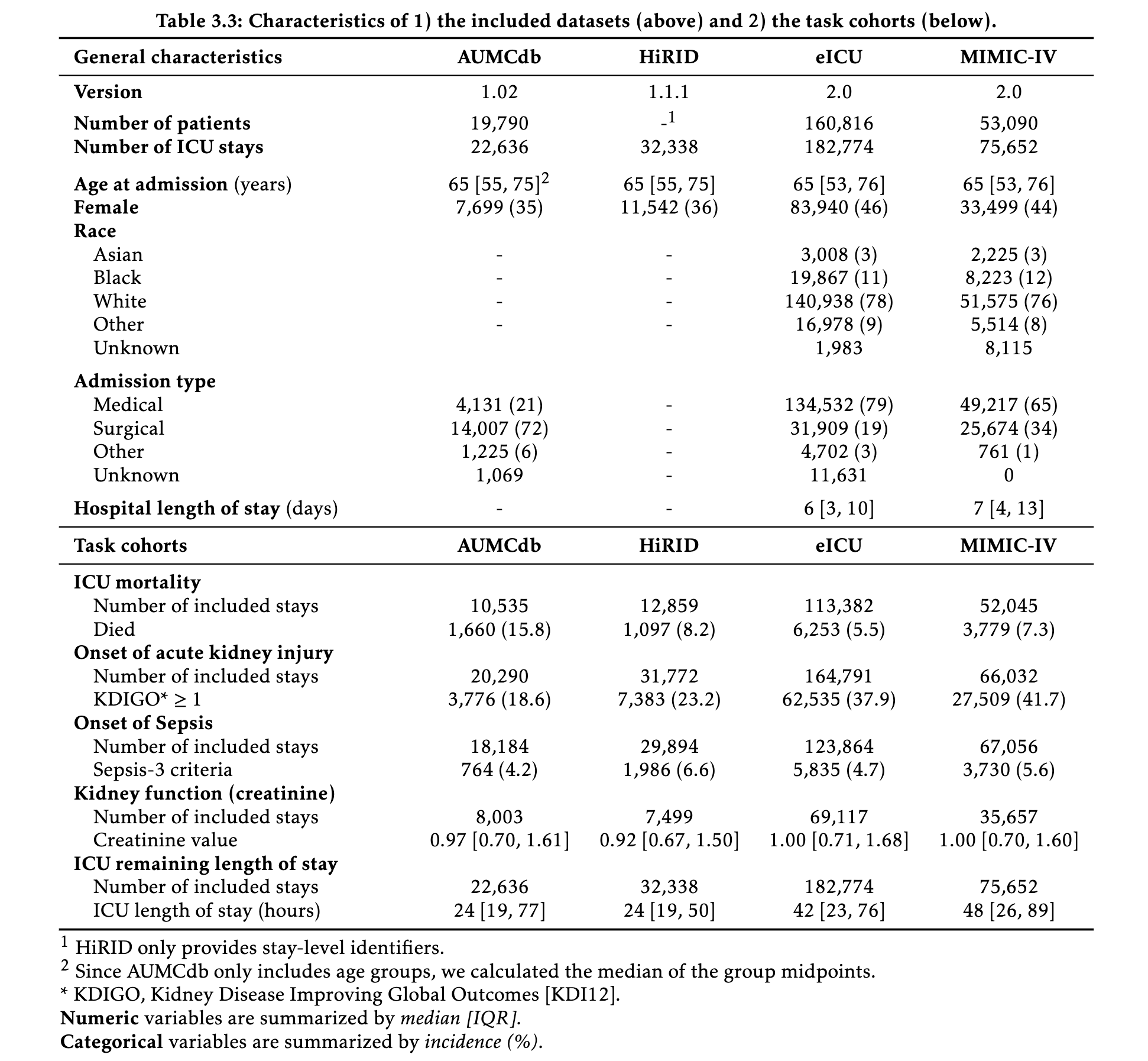
Dataset Characteristics

Datasets and Tasks

Four publicly available ICU datasets:

Dataset MIMIC-III / IV eICU HiRID AUMCdb
Stays 40k (0.1k) / 73k 201k (2k) 34k 23k
Version v1.4 / v2.2 v2.0 v1.1.1 v1.0.2
Frequency (time-series) 1 hour 5 minutes 2 / 5 minutes up to 1 minute
Origin USA USA Switzerland Netherlands
Originally published 20151 / 20202 20173 20204 20195

Five common ICU prediction tasks: Mortality, Acute Kidney Injury, Sepsis, Kidney Function, Length of Stay.

Prediction Task Overview

No Task Frequency Type Related Work
1 Mortality Once per stay* C [89], Baker et al., 2020, Continuous and automatic mortality risk prediction using vital signs in the intensive care unit: A hybrid neural network approach,” Scientific Reports; [90], Lu et al., 2022, Machine LearningBased Short-Term Mortality Prediction Models for Patients With Cancer Using Electronic Health Record Data: Systematic Review and Critical Appraisal,” JMIR Medical Informatics; [91], Medic et al., 2019, Evidence-based Clinical Decision Support Systems for the prediction and detection of three disease states in critical care: A systematic literature review. F1000Research; [92], Sharma et al., 2017, Mortality Prediction of ICU patients using Machine Leaning: A survey,” ACM Press; [93], Syed et al., 2021, Application of Machine Learning in Intensive Care Unit (ICU) Settings Using MIMIC Dataset: Systematic Review,” Informatics
2 Acute Kidney Injury (AKI) Hourly C [94], Huang et al., 2021, An Interpretable Temporal Convolutional Network Model for Acute Kidney Injury Prediction in the Intensive Care Unit,” 2021 IEEE International Conference on Bioinformatics and Biomedicine (BIBM); [95], Nikkinen et al., 2022, Developing a supervised machine learning model for predicting perioperative acute kidney injury in arthroplasty patients,” Computers in Biology and Medicine; [96], Pan et al., 2019, A Self-Correcting Deep Learning Approach to Predict Acute Conditions in Critical Care,” http://arxiv.org/abs/1901.04364; [97], Rank et al., 2020, Deep-learning-based real-time prediction of acute kidney injury outperforms human predictive performance,” npj Digital Medicine; [98], Shamout et al., 2021, Machine Learning for Clinical Outcome Prediction,” IEEE Reviews in Biomedical Engineering; [99], Wang et al., 2020, Real-Time Prediction of AKI Among Middle-Aged and Older in ICU: A Retrospective and Machine Learning Study,” In Review; [100], Koyner et al., 2018, The Development of a Machine Learning Inpatient Acute Kidney Injury Prediction Model*: Critical Care Medicine
3 Sepsis Hourly C [101], Kok et al., 2020, Automated prediction of sepsis using temporal convolutional network,” Computers in Biology and Medicine; [102], Lauritsen et al., 2020, Early detection of sepsis utilizing deep learning on electronic health record event sequences,” Artificial Intelligence in Medicine; [103], Merath et al., 2020, Use of Machine Learning for Prediction of Patient Risk of Postoperative Complications After Liver, Pancreatic, and Colorectal Surgery,” Journal of Gastrointestinal Surgery; [104], Fleuren et al., 2020, Machine learning in intensive care medicine: Ready for take-off? Intensive Care Medicine; [51], Moor et al., 2021, Predicting sepsis in multi-site, multi-national intensive care cohorts using deep learning,” http://arxiv.org/abs/2107.05230; [105], Moor et al., 2019, Early Recognition of Sepsis with Gaussian Process Temporal Convolutional Networks and Dynamic Time Warping,” PMLR; [106], Muralitharan et al., 2021, Machine LearningBased Early Warning Systems for Clinical Deterioration: Systematic Scoping Review,” Journal of Medical Internet Research; [107], Reyna et al., 2019, Early Prediction of Sepsis from Clinical Data: The PhysioNet/Computing in Cardiology Challenge 2019,” 2019 Computing in Cardiology (CinC); [98], Shamout et al., 2021, Machine Learning for Clinical Outcome Prediction,” IEEE Reviews in Biomedical Engineering; [108], Wang et al., 2022, Integrating Physiological Time Series and Clinical Notes with Transformer for Early Prediction of Sepsis,” http://arxiv.org/abs/2203.14469
4 Kidney Function (KF) Once per stay* R [109], Tomašev et al., 2019, A clinically applicable approach to continuous prediction of future acute kidney injury,” Nature; [110], Futoma et al., 2016, Predicting Disease Progression with a Model for Multivariate Longitudinal Clinical Data,” PMLR; [111], Perotte et al., 2015, Risk prediction for chronic kidney disease progression using heterogeneous electronic health record data and time series analysis,” Journal of the American Medical Informatics Association : JAMIA; [112], Cheng et al., 2018, Predicting Inpatient Acute Kidney Injury over Different Time Horizons: How Early and Accurate? AMIA Annual Symposium Proceedings
5 Length of Stay (LoS) Hourly R [113], Shillan et al., 2019, Use of machine learning to analyse routinely collected intensive care unit data: A systematic review,” Critical Care; [114], Guo et al., 2020, An evaluation of time series summary statistics as features for clinical prediction tasks,” BMC Medical Informatics and Decision Making
  • C: Classification task
  • R: Regression task
  • Once per stay: Indicates predictions are made once during the ICU stay.

Transfer Learning

  • What if we train a generalized model on “most generalizable” eICU?
  • Finetune on “difficult” HiRID

AUROC:

AUPRC:

External Validation with Mortality

AUROC:

AUPRC:

  • Column: Model trained on dataset
  • Row: Model evaluated on dataset
  • Diagonal: Internal validation (same dataset)

Classification performance

Regression performance

Mortality Leakage Experiment

Static Experiment

Sepsis Cohort

Extra Slides: C3: 🏗️ Framework for Foundational AI

How Do We Create Research that Translates to Clinical Practice?

In Data science at the singularity, Donoho defines three characteristics that enable frictionless reproducibility1 :

  • Data: Datafication of everything, with a culture of research data sharing.
  • Re-execution: Research code sharing including the ability to exactly re-execute the same complete workflow by different researchers.
  • Challenges: Adopting challenge problems as a new paradigm powering methodological research.

MEDS FM Timeline

MEDS Modelling

Sequence Lengths of Events in EHR Data

Tokenizer Comparison

Zipf’s Law in EHR Data

{fig-cap=“Zipf’s Law in EHR Data” width=80% .no-dark}

Representations

  • Analyze the learned representations of foundation models to understand what they capture and how they differ across tasks and datasets.
  • Use dimensionality reduction techniques (e.g., t-SNE 1, UMAP) to visualize the embeddings and identify clusters or patterns related to specific clinical conditions or outcomes.
  • Leukocytis embeddings t-SNE colored by task labels (positive/negative):

HarmonizEHR Embeddings

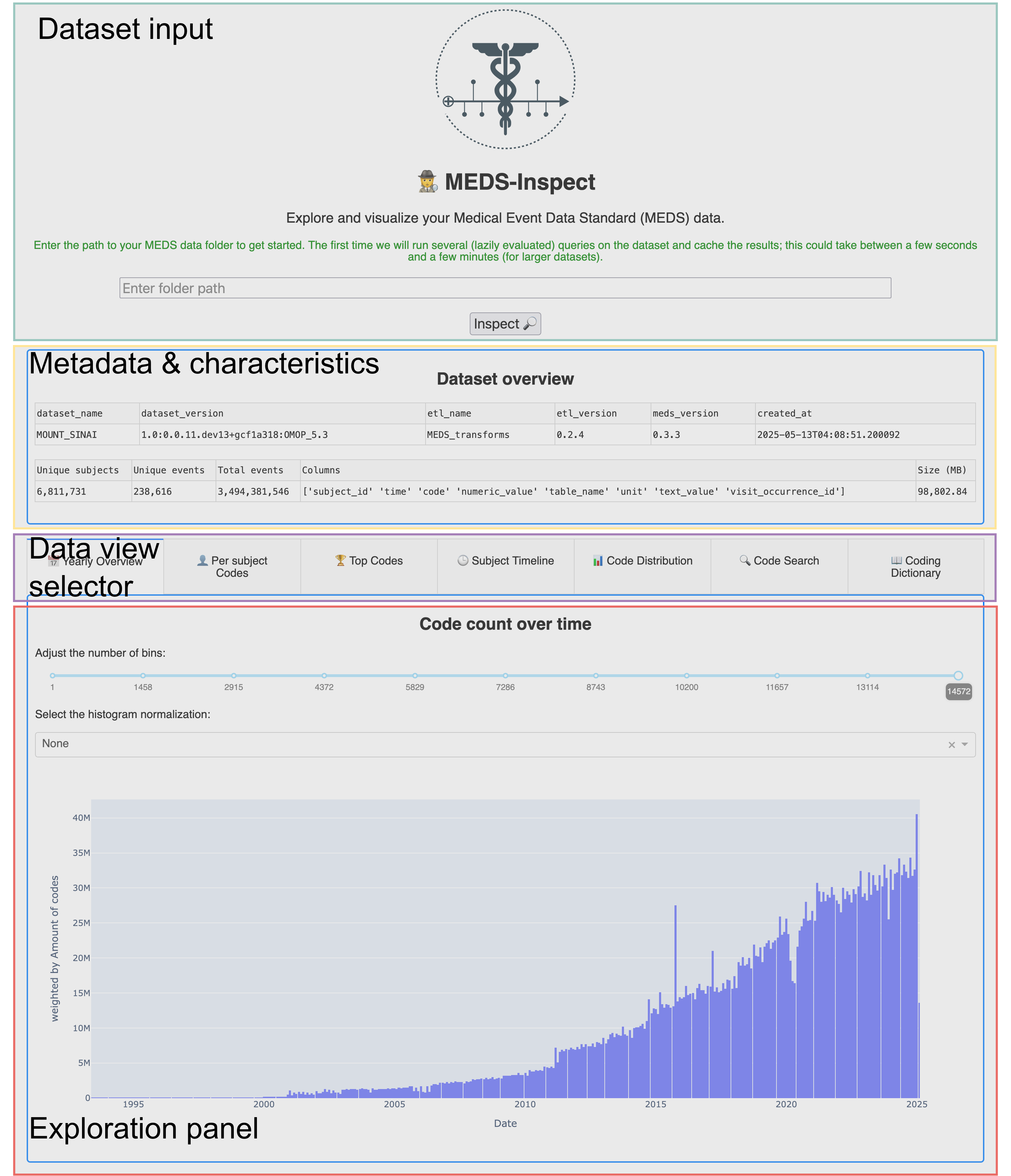
MEDS-Inspect

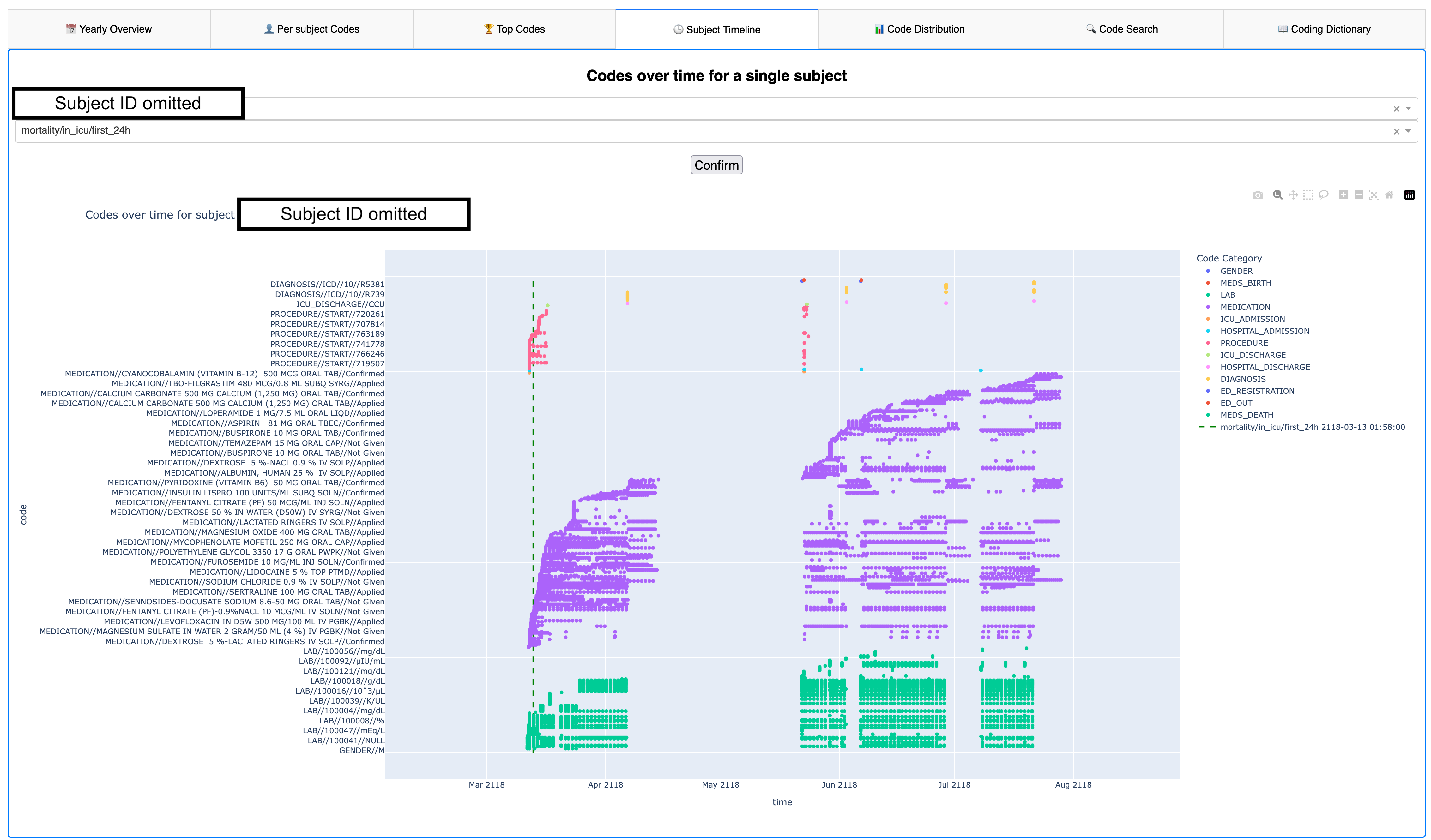
MEDS-Inspect Subject Timeline

Differences Between MOTOR and CEHR‑X‑GPT

Aspect MOTOR CEHR‑X‑GPT
Primary training objective Time‑to‑event forecasting over intervals Next‑token prediction + TD + TTE on time tokens
Main use in paper Representation learning (linear probing) Representation, zero‑shot prediction, synthetic EHR generation
Fine‑tuning Reported to add little over linear probing Fine‑tuning gives large gains over linear probing on several tasks
Input domains Includes measurements, observations Excludes measurements/observations so far
Zero‑shot prediction Not supported in this comparison Strong zero‑shot performance on multiple risk tasks
Synthetic data Not evaluated Generates large‑scale synthetic OMOP EHR with good utility and low risk
\n" + "\n" + "\n" + "\n" + ""